

The Most Remarkable Birds of Manu National Park
The birds of Manu National Park are one of the greatest treasures of Amazonian biodiversity, where new species are discovered every year, surprising the scientific world and nature lovers alike. Although attention is often focused on the large mammals and predators of the rainforest, the birds of Manu offer a unique spectacle that makes this destination a paradise for birdwatching. The Manu Amazon is one of the most sought-after places for birdwatchers and travelers looking to observe exotic, rare, and unique species in their natural habitat.
One of the greatest wildlife spectacles in the Amazon occurs daily in Manu, when hundreds of macaws and parrots gather at the famous clay licks located along the Amazonian rivers. This impressive natural phenomenon attracts birdwatchers from all over the world, who come to witness one of the most fascinating events in the Peruvian rainforest. Whether you’re a passionate birdwatcher or simply a nature lover, Manu’s diverse birdlife will make your trip an unforgettable experience.
With over 1,300 recorded bird species, Manu National Park boasts one of the highest concentrations of birds on the planet, representing a significant portion of global biodiversity. Nearly 30% of these species are endemic to the Amazon region, while many others are migratory birds that travel through the rainforest at different times of the year. This makes Manu one of the most important destinations in Peru and South America for birdwatching and nature tourism.
Travel with us to Manu National Park.
Amazing Bird Density in the Peruvian Amazon Rainforest
In 1982, one of the most impressive records in the history of birdwatching was set in Manu National Park, specifically at the Cocha Cashu Biological Station, located within the park. LSU researcher Ted Parker and Princeton graduate Scott Robinson recorded 331 bird species in just 24 hours, marking a world milestone in birdwatching. In this extraordinary area of the Peruvian Amazon, within a mere 5,500 hectares of rainforest, some 575 bird species have been identified—a surprising number considering that approximately 700 species are recorded throughout North America.
The Amazon rainforest’s strategic location, very close to the equator, and its vast territorial expanse generate an incredible diversity of tropical climates. From warm and humid areas in the north to cool and humid areas in the central regions and more temperate and drier areas in the south, each ecosystem creates ideal conditions for wildlife. This climatic variety makes the Peruvian Amazon one of the richest habitats for thousands of bird species.
The Manu rainforests have a naturally multi-layered structure, providing shelter and food for birds and their prey, such as insects and small rodents. From the upper canopy, where many species find ideal nesting and feeding grounds, through the middle layers of the forest, to the forest floor covered with shrubs and low vegetation, each level of the forest plays a fundamental role in conserving biodiversity and maintaining ecological balance.
Cigüeña Jabirú (Jabiru mycteria)
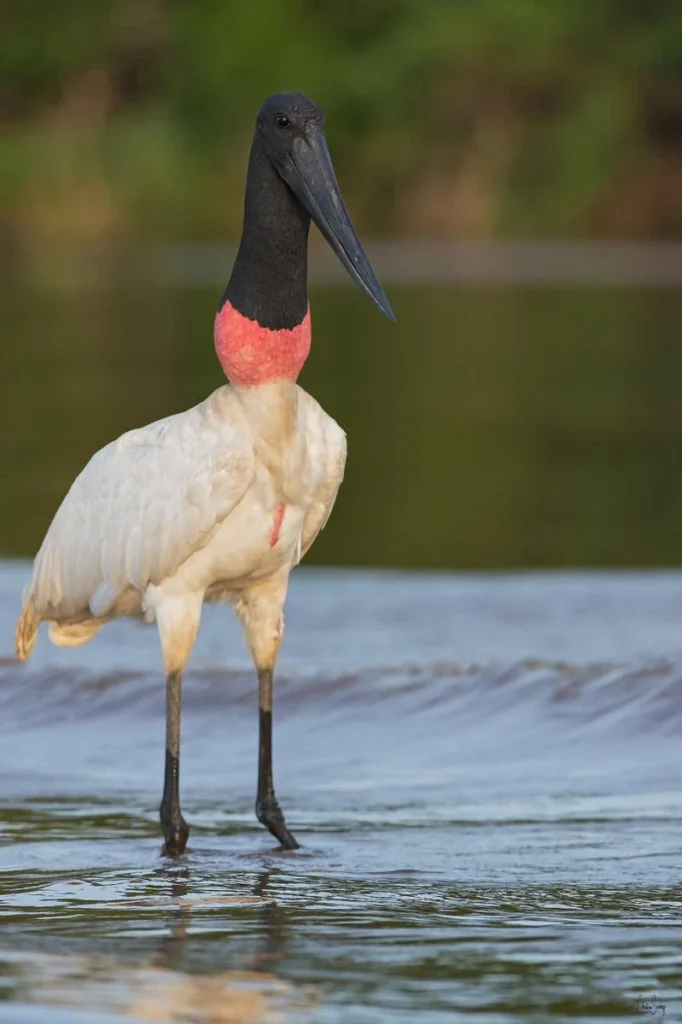
The Jabiru Stork is one of the most impressive birds in the Amazon and an emblematic species that can be observed in Manu National Park. Its plumage is mostly white, with a bare black head and neck and a distinctive reddish band at the base of its neck.
Its enormous, strong, slightly upturned black beak is one of its most distinctive features. Males are typically larger than females, reaching an impressive wingspan of up to 2.6 meters, making it one of the largest flying birds in South America.
During the breeding season, which runs from December to May, Jabiru pairs form monogamous bonds and build large nests in tall trees, usually away from other groups. The female can lay up to five eggs, which are incubated by both parents.
After hatching, both the male and female actively participate in caring for the chicks. This parental involvement increases the chicks’ chances of survival in their demanding natural environment.
Jabiru birds are not particularly vocal, but they use visual cues and body language to communicate. Their gular pouch changes color and becomes more intense when the bird is excited or alert.
Their diet is primarily carnivorous. They feed on fish, insects, amphibians, reptiles, and small mammals, using their powerful beak as a hunting tool in lagoons, wetlands, and Amazonian rivers.
Halcón de Collar Negro
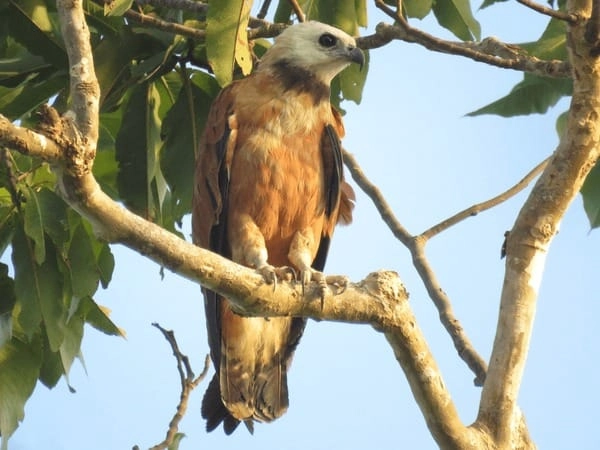
The Black-collared Hawk is an elegant bird of prey that inhabits humid tropical forests, swamps, and riverine areas of South America. It is a rare species, but can be observed in specific areas of the Peruvian Amazon.
It is distinguished by its white head, black crown, and reddish-cinnamon body, with a lighter breast and a dark crescent on the upper chest, a feature that gives it its characteristic name.
It is an agile and precise hunter, specializing in capturing fish, small lizards, insects, and rodents. Its hunting technique consists of diving from high branches or making short flights over bodies of water.
Its presence in the Amazonian ecosystem is important for maintaining the natural balance, controlling populations of small prey and forming an essential part of the food chain.
Guacamayo Rojo (Ara macao)
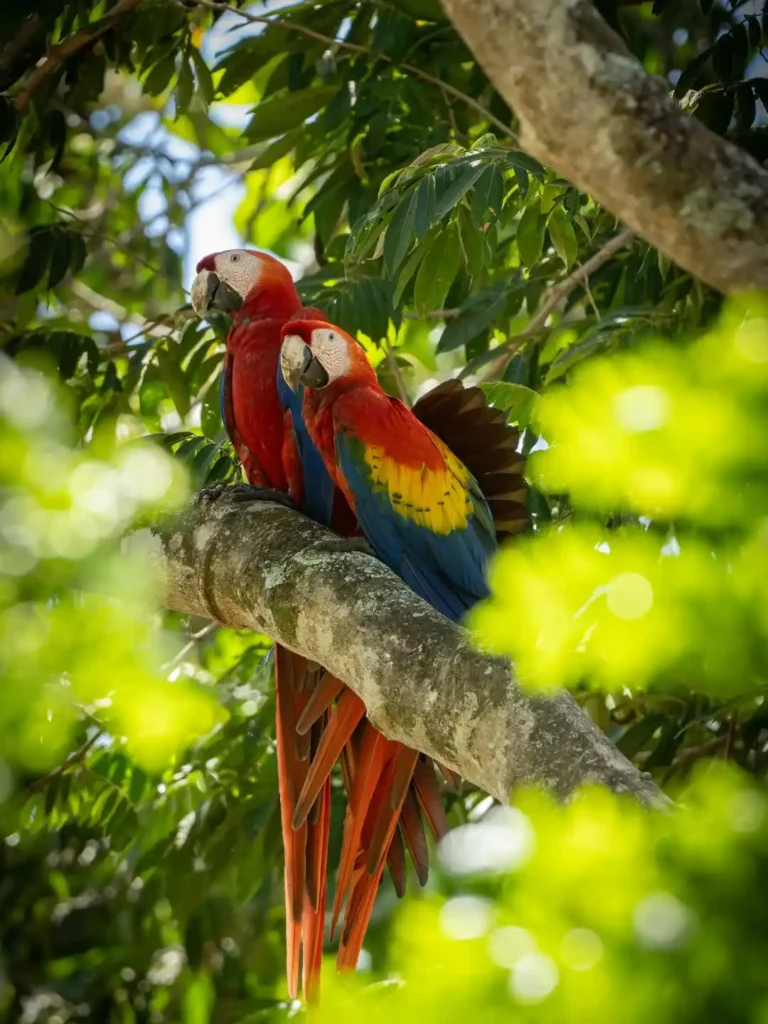
The Scarlet Macaw is one of the most iconic birds of the Peruvian Amazon and one of the biggest tourist attractions in Manu National Park. Its vibrant red, yellow, and blue colors make it one of the most representative symbols of the rainforest.
These birds often gather in large groups at the famous clay licks of Manu, where they consume essential minerals to neutralize toxins present in their natural diet and supplement their daily nutrition.
In addition to their beauty, they play a vital role in rainforest regeneration, dispersing seeds over long distances and helping new plants and trees grow.
Scarlet macaws are monogamous and mate for life. The female lays between one and four eggs, although usually only one or two chicks survive due to natural competition within the nest.
Their strong, curved beak allows them to crack hard seeds and nuts. They are intelligent, social birds, highly adapted to life in the Amazon’s primary forests.
Hoatzin (Opisthocomus hoazin)
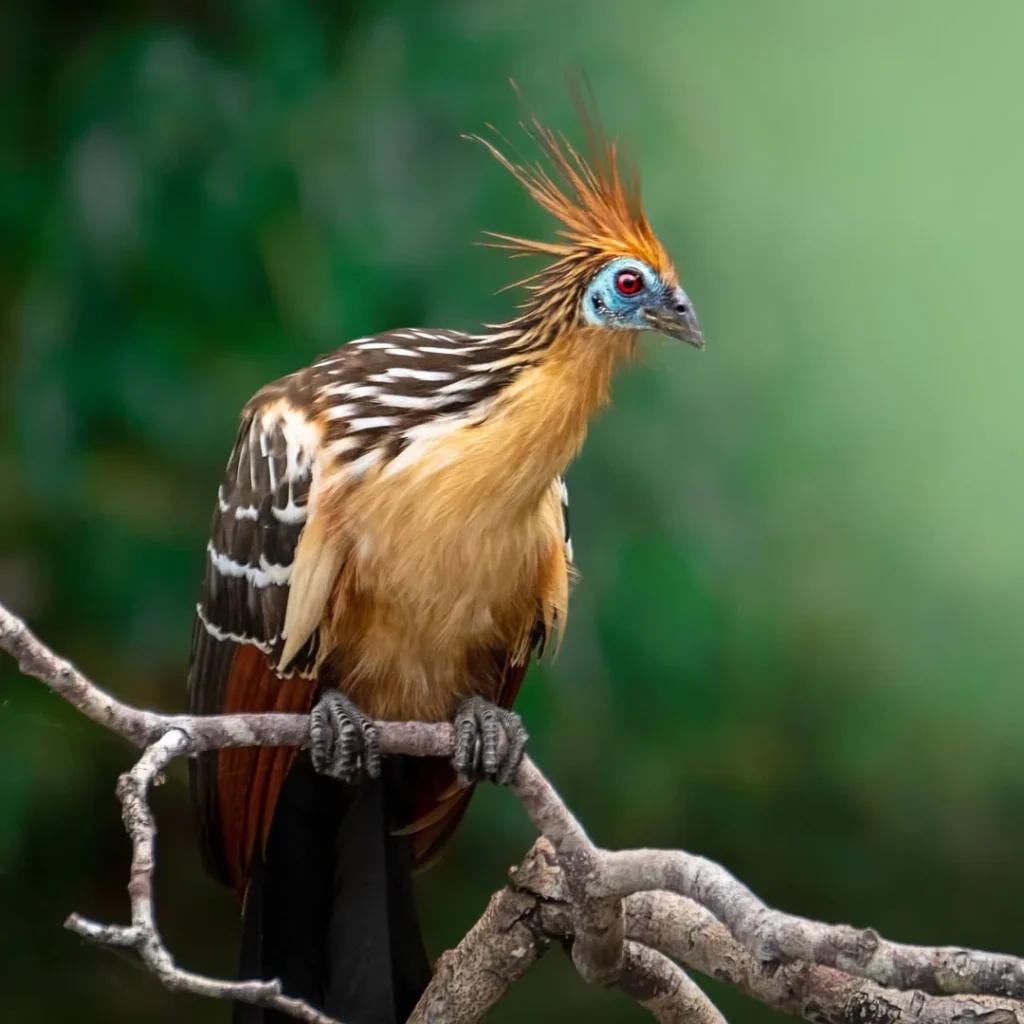
The Hoatzin is one of the strangest and most fascinating birds in the Amazon, known for its prehistoric appearance and unique digestive system. It is considered a primitive species and can be found in swampy areas and along the banks of Amazonian rivers.
One of its most striking characteristics is that its chicks are born with small, functional claws on their wings, an adaptation that allows them to climb among branches and escape predators.
The Hoatzin feeds exclusively on leaves and shoots, using a specialized digestive system similar to that of some herbivorous mammals. Its digestive process ferments food before it is fully processed.
Adults have reddish-brown plumage, a long tail, and a distinctive crest on their head. Their red eyes and blue face make them easily recognizable among Amazonian birds.
Its unique appearance and behavior make it one of the most interesting species for birdwatchers and lovers of Amazonian wildlife.
Toco Tucán (Ramphastos toco)
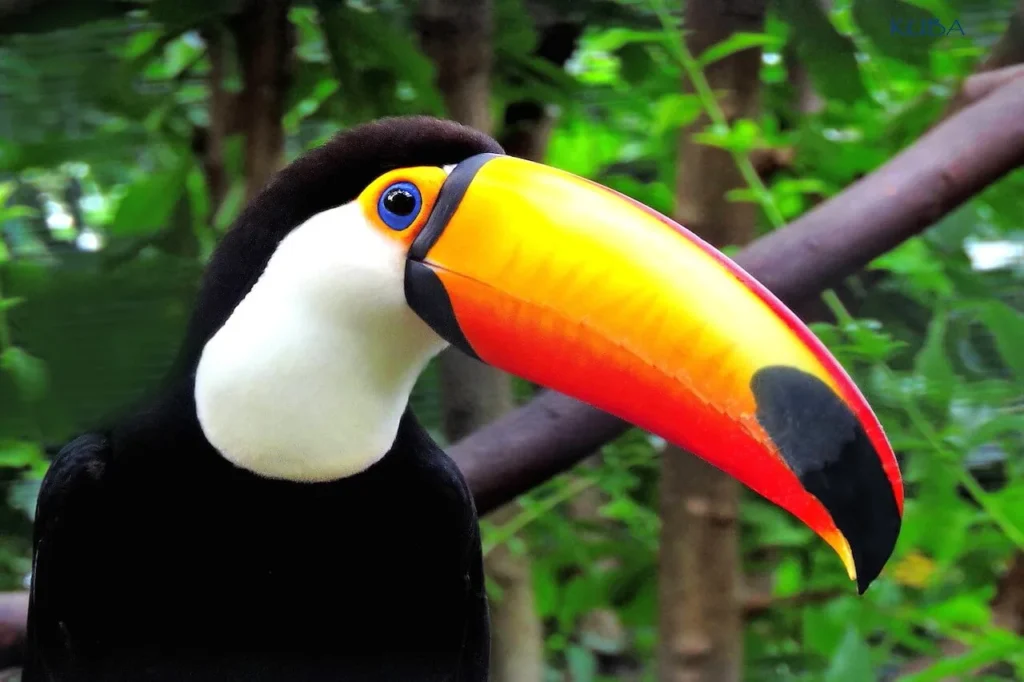
The Toco Toucan is the largest toucan in the world and one of the most striking birds in South America. Its enormous, bright orange beak can measure up to a third of its total body length.
Although its beak appears heavy, it is actually extremely light thanks to its internal structure composed of keratin and air cavities, which allows it to maintain balance and functionality.
Its diet consists mainly of fruit, but it also consumes insects, eggs, and small reptiles. Its large beak allows it to reach fruit on hard-to-reach branches.
Toucans nest in tree cavities, often reusing holes abandoned by woodpeckers. Both parents participate in incubating and raising their chicks.
In addition to feeding, they use their beak as a thermoregulator, helping to control their body temperature in the hot and humid climate of the Amazon.
Guacamayo Azul y Amarillo (Ara ararauna)
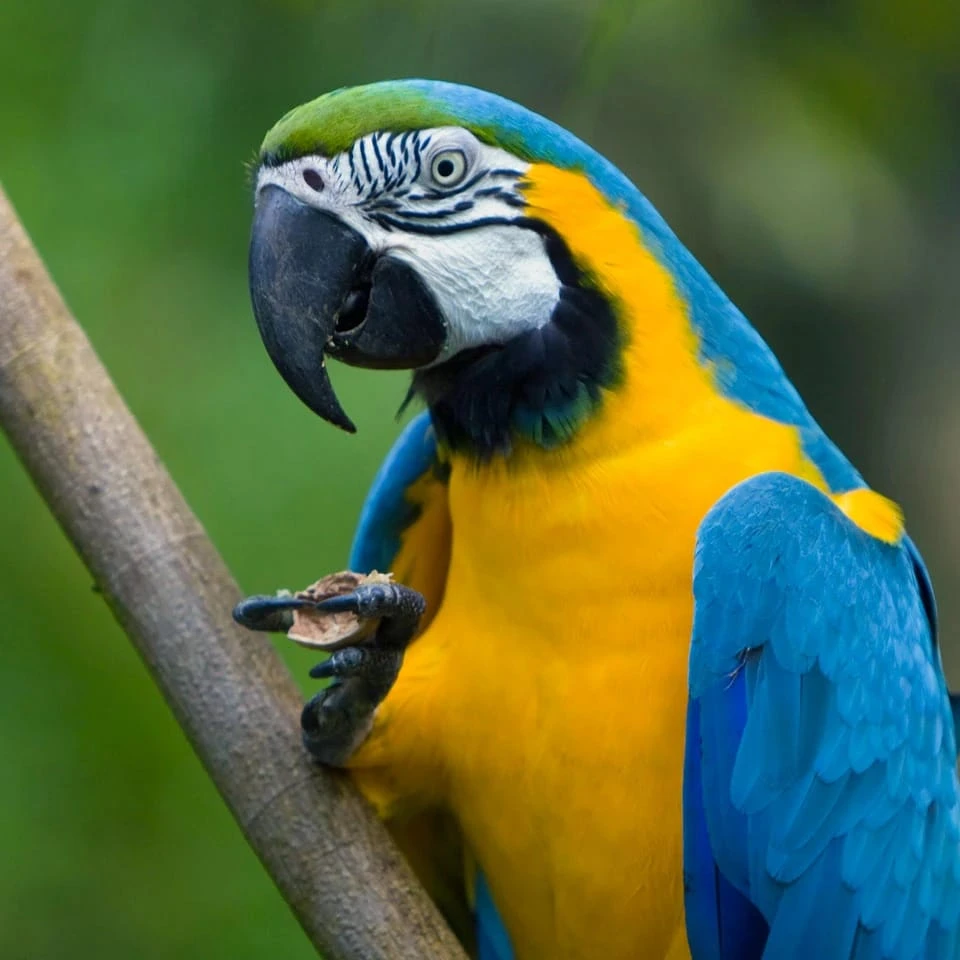
The Blue-and-yellow Macaw is one of the most colorful and spectacular birds in the Amazon rainforest. Its vibrant blue plumage on its upperparts and bright yellow chest make it one of the most photographed species in Manu National Park.
Its powerful black beak is designed for cracking hard seeds, nuts, and fruits. These highly intelligent birds can mimic sounds and even some human words.
Like other macaws, they visit clay licks to consume minerals that help neutralize toxins present in certain fruits in their diet.
They are monogamous birds and typically form lifelong pairs. They build their nests in palm trees or natural cavities, where the female lays two to three eggs.
Águila Arpía
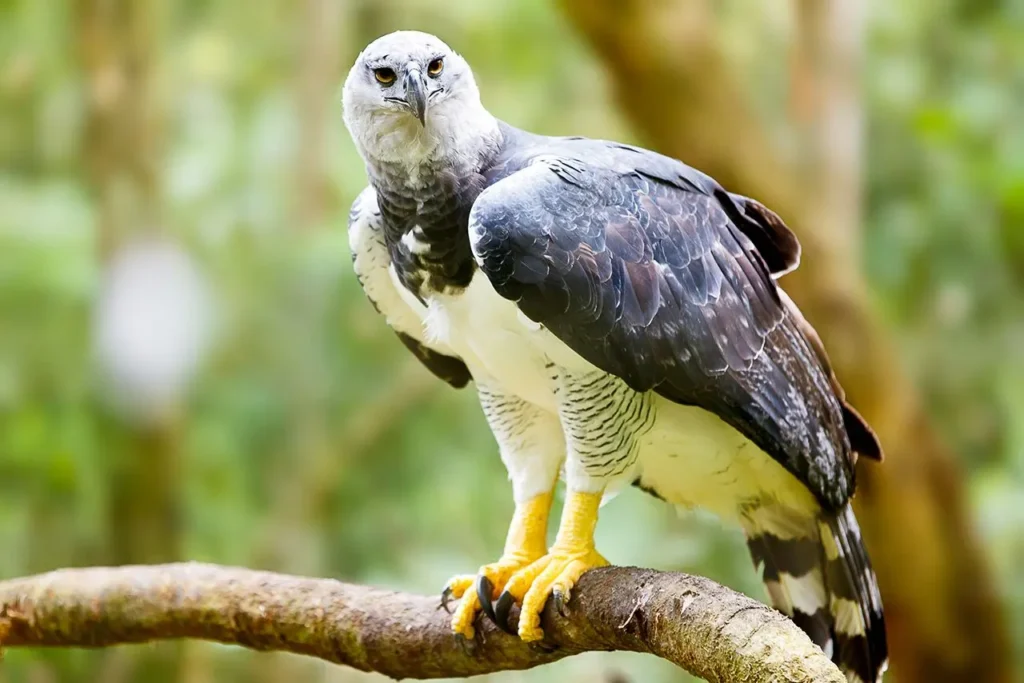
The Harpy Eagle is one of the most impressive birds of prey in the Amazon and one of the most powerful predators inhabiting Manu National Park. Renowned for its enormous strength and size, it is considered the largest raptor in the rainforest.
Females are noticeably larger than males and can reach up to 22 pounds in weight, with a wingspan of nearly 2 meters. Their plumage combines shades of gray, black, and white, highlighting their double crest, which gives them an imposing appearance.
Thanks to their powerful talons and extraordinary eyesight, they hunt arboreal mammals such as monkeys and sloths, playing a key role in the ecological balance of the Amazon rainforest.
Colibríes
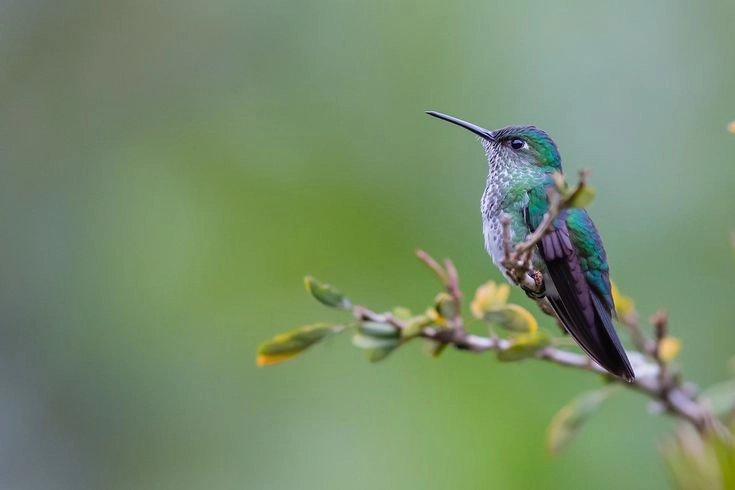
The Peruvian Amazon is home to an impressive diversity of hummingbirds, small, brightly colored birds renowned for their speed and beauty. Many unique species can be observed in Manu National Park.
Their plumage displays intense, metallic colors that encompass virtually the entire rainbow spectrum. Shades of blue, green, purple, and gold make these birds true living jewels of the rainforest.
Hummingbirds play a vital role in the pollination of Amazonian flowers, helping to maintain biodiversity and the natural regeneration of tropical ecosystems.
Buitre Rey
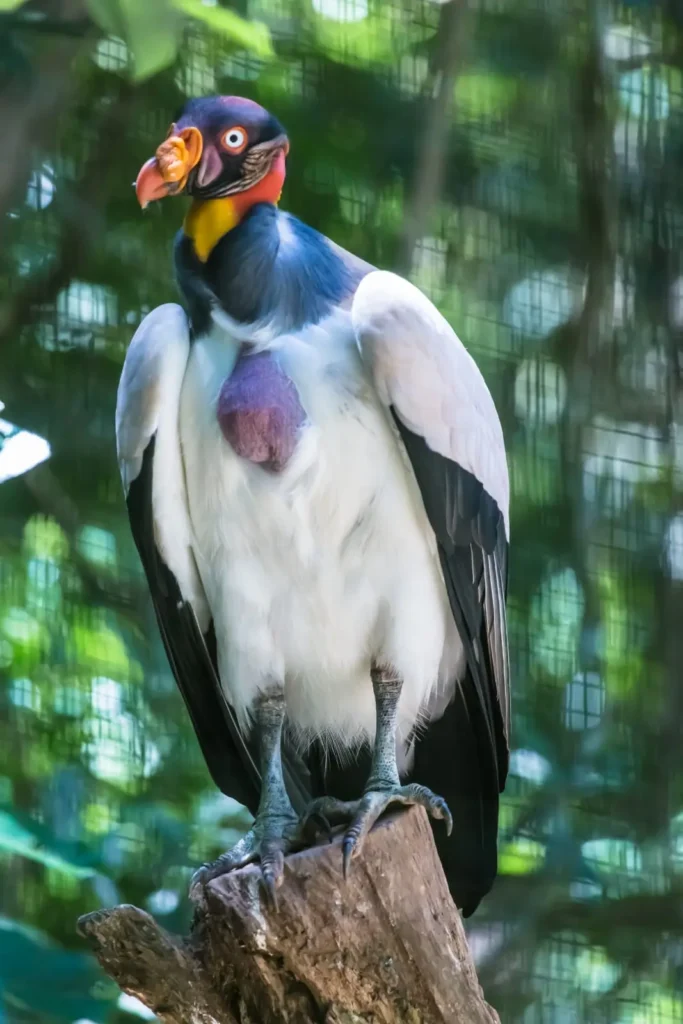
The King Vulture is one of the most striking scavenger birds in the Peruvian Amazon. Its impressive combination of colors on its head and neck makes it one of the most recognizable species in the rainforest.
Its plumage is predominantly black and white, while its head displays shades of orange, yellow, red, blue, and purple. This unique appearance has earned it a special place among the most exotic birds of South America.
It plays a vital ecological role by scavenging the remains of dead animals, helping to prevent disease and maintaining the natural balance of the Amazonian ecosystem.
Garza Capucha
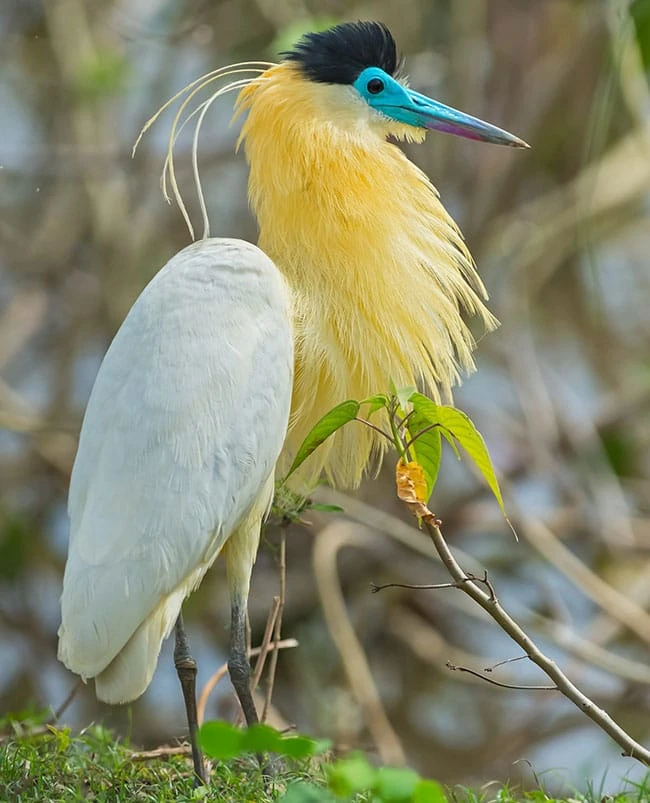
The Hooded Heron is an elegant water bird that inhabits rivers, lagoons, and wetlands of the Amazon. It is especially prized for its beauty and striking multicolored plumage.
It is distinguished by its blue and pink tones on its beak, bright yellow feathers on its neck, and long ornamental feathers on its head, which give it a sophisticated and unique appearance.
Its diet consists mainly of small fish, amphibians, and insects, which it hunts patiently in shallow waters with quick and precise movements.
Perico Cabeza Oscura
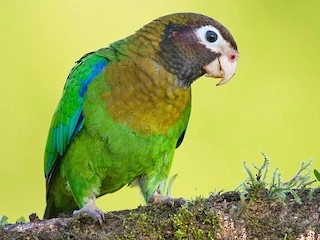
The Dusky-headed Parakeet is one of the most common and social parrots in the Peruvian Amazon. Its bright green plumage combined with bluish and gray tones makes it easily identifiable.
It inhabits semi-open forests, plantations, and riverine areas, where it usually moves in pairs or small groups searching for fruits, seeds, flowers, and insects.
Its active behavior and strong social interaction make it one of the most entertaining birds to observe during a tour of the Manu rainforest.
Cabeza de Oro
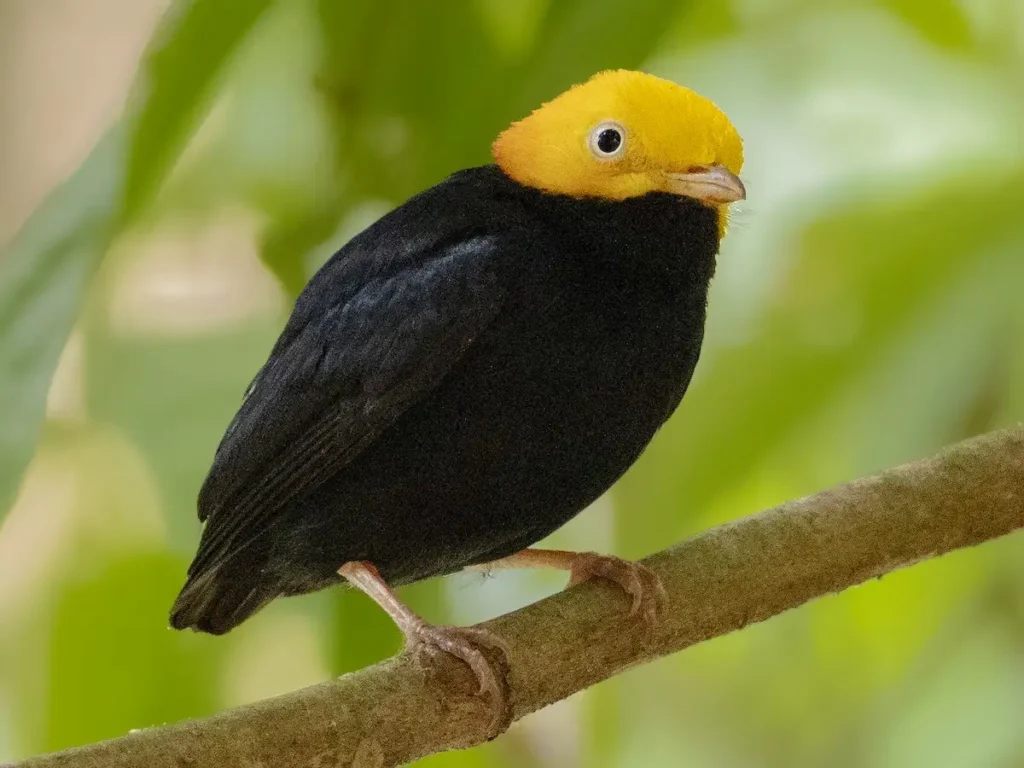
The Golden-headed Manakin is a small but spectacular tropical bird known for the brilliant golden color of its head. It is one of the most fascinating species for birdwatchers in the Amazon.
The males stand out with their black bodies, pink legs, and striking golden crown, as they perform complex courtship rituals with leaps and rapid movements to attract females.
Their unique behavior and intense coloring make this species a jewel of birdwatching in the Peruvian rainforest.
Puffbirds
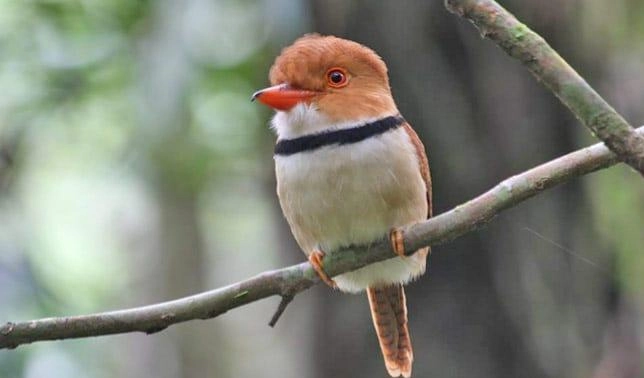
Puffbirds are insectivorous birds with a calm appearance that inhabit the tropical rainforests of the Amazon. Although they often go unnoticed, their robust build and distinctive plumage make them quite special.
They are characterized by remaining motionless for long periods while waiting for the perfect moment to catch insects and small prey from low or mid-level branches.
Their soft plumage, strong beaks, and bright eyes make them unique birds within the great diversity of the Amazon rainforest.
Tirano Pigmeo de Escamas
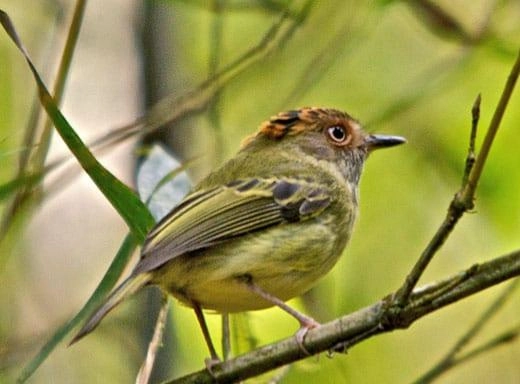
The Pygmy Scaled Tyrant is a small tropical bird that is difficult to spot due to its size and inconspicuous habits. It inhabits the densest and darkest areas of the Amazon rainforest.
Despite its small size, it has very attractive plumage and a small crest that it can raise as a defense mechanism or during courtship.
Its beauty and rarity make it a highly sought-after species for birdwatchers specializing in the Peruvian Amazon.
Trogones
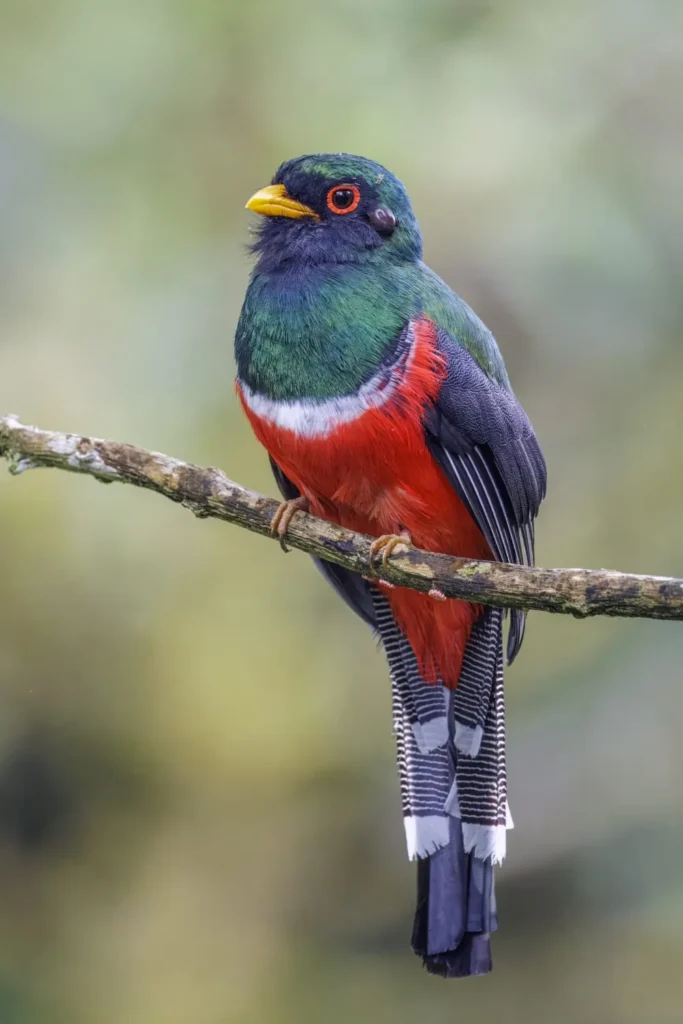
Trogons are among the most colorful birds in the Amazon, rivaling toucans and macaws in beauty. They are highly prized by birdwatchers for their vibrant colors and calm demeanor.
Among their varieties are species with metallic green plumage, deep blue, and bright red breasts, which stand out against the lush vegetation of the rainforest.
They often perch on low branches while foraging for insects and small fruits, providing excellent opportunities for nature photography.
Motmots
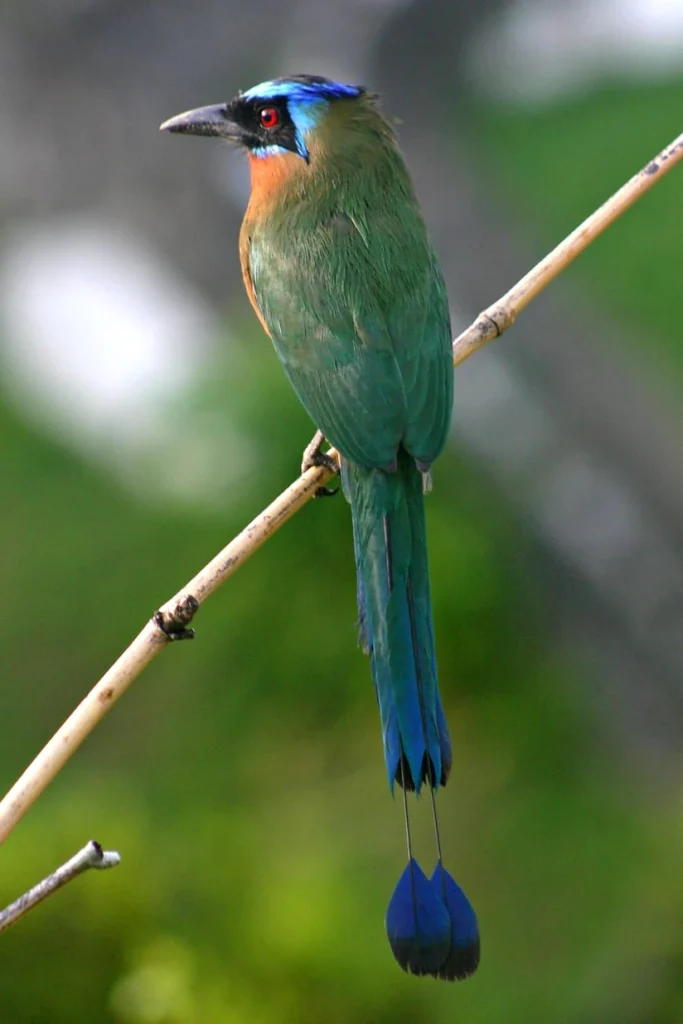
Motmots are tropical birds with vibrant plumage and long, ornamental tails, often ending in a racket shape. They are common inhabitants of the Amazon rainforest.
These birds use their long tails as a defense mechanism and for communication, constantly moving them to distract predators or attract mates.
Their diet includes fruits, insects, small frogs, and lizards, making them versatile and essential species for ecological balance.
Pericos y Loros
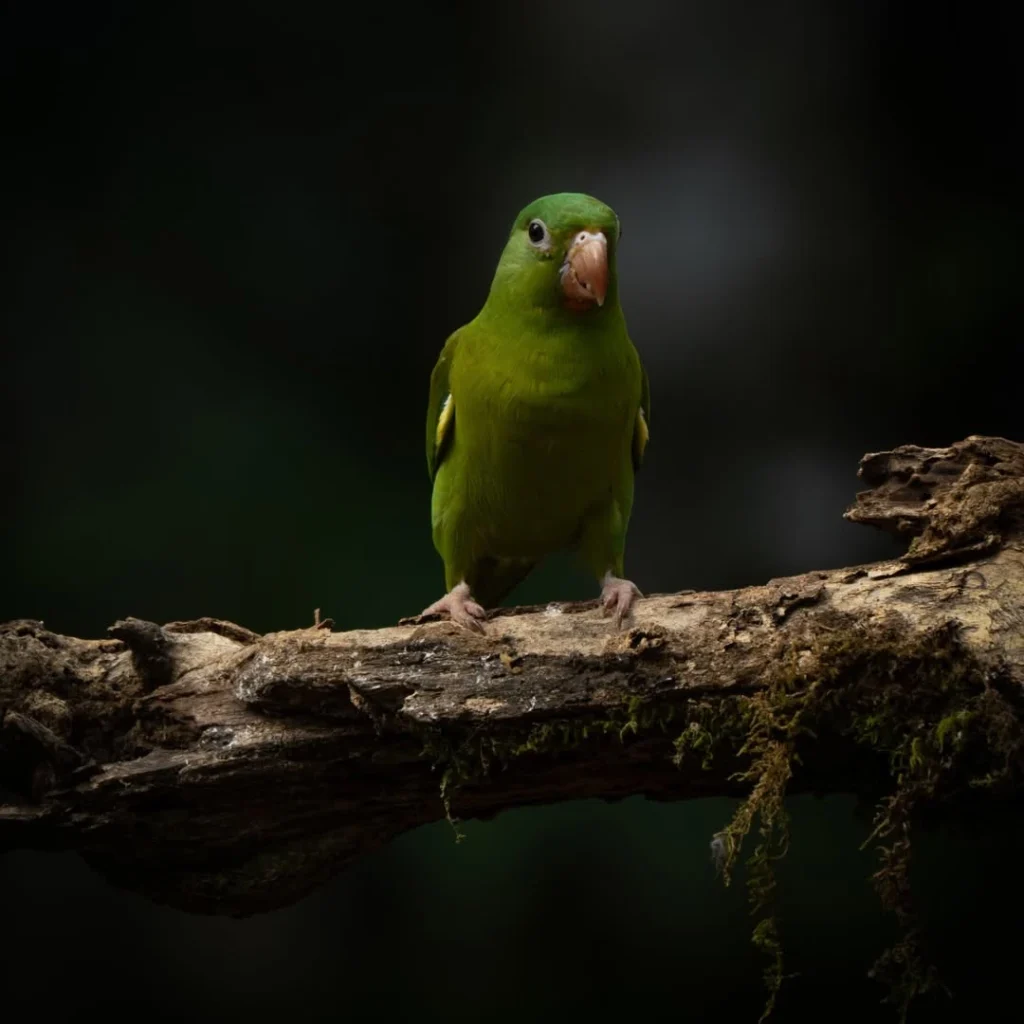
Amazonian parakeets and parrots are among the most striking and noisy birds in the rainforest. Their bright colors and social behavior make them one of the biggest attractions during tours to Manu National Park.
Many species fly in large groups and can be seen feeding on fruits, seeds, and flowers throughout the rainforest, especially in areas near rivers and clay licks.
Their intelligence, communication skills, and diverse colors make them an essential part of the Amazonian experience.
Potoos
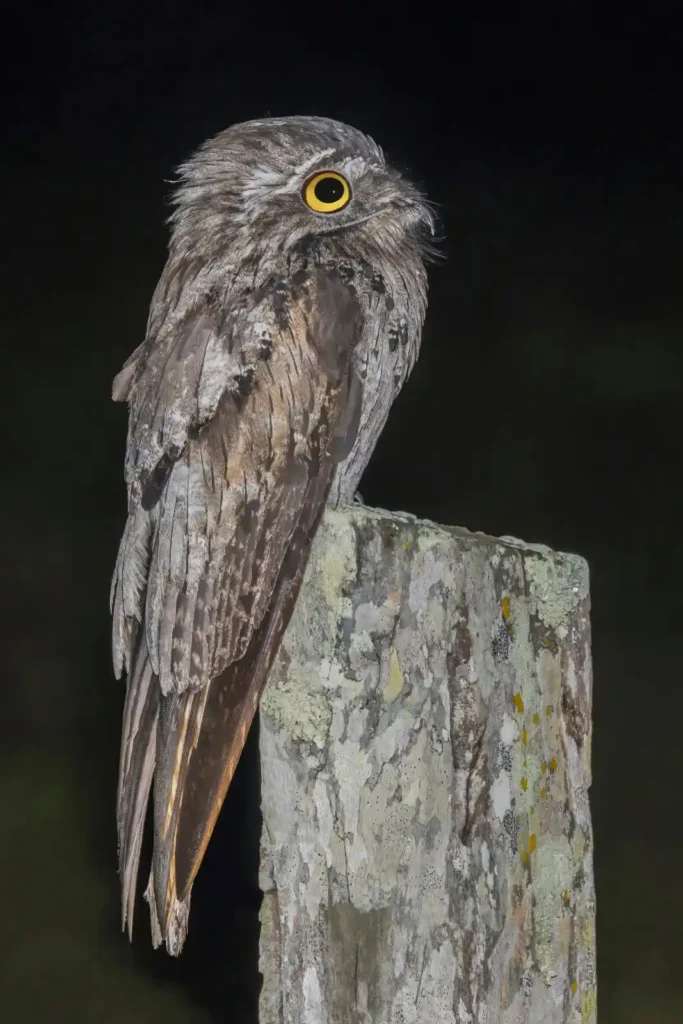
Potoos are nocturnal birds, experts in camouflage, and considered among the most difficult to find in the Peruvian Amazon. During the day they remain motionless, perfectly blending in with branches and tree trunks.
Their brown and gray plumage allows them to go unnoticed even at close range, while their enormous eyes are adapted for night vision.
At night they emerge to hunt flying insects, using their large mouths and swift movements, making them efficient nocturnal predators of the rainforest.
Barbet Versicolor Oro (Eubucco versicolor)
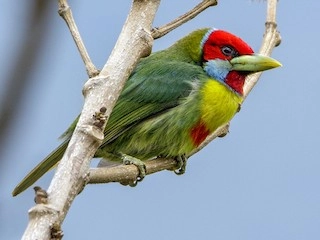
The Golden Versicolor Barbet is a colorful montane forest bird that stands out for its vibrant plumage and its presence in the humid Andean forests near Manu National Park. It is a fascinating species for birdwatchers due to its intense color contrasts.
Males display green tones, a yellow breast, and a reddish head, while females have softer colors, with a predominance of green and blue on the face. Both have a robust, light-colored bill.
They are found alone, in pairs, or as part of mixed flocks, moving between the canopy and mid-levels of the forest. Their soft, repetitive song is a sign of their presence.
Gallo de las Rocas Andino (Rupicola peruvianus)
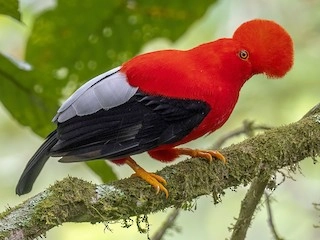
The Andean Cock-of-the-rock is one of Peru’s most emblematic birds and a national symbol of Andean biodiversity. Its spectacular, vibrant orange plumage makes it one of the most sought-after species on birdwatching tours.
The males perform impressive courtship displays at dawn, hopping, calling loudly, and raising their crests to attract females. This natural spectacle is one of the most fascinating in the Andes.
It inhabits cloud forests and rocky areas near ravines and cliffs, where it builds its nests and finds natural shelter.
Clorofonia de Nuca Azul (Chlorophonia cyanea)
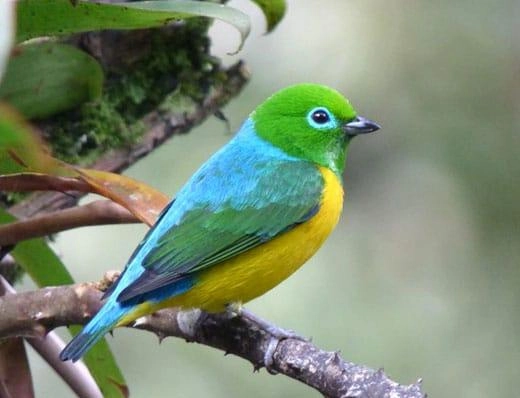
The Blue-naped Chlorophonia is a small tropical bird recognized for its bright colors and striking combination of green, yellow, and deep blue. It is a species highly prized by nature photographers.
Males are distinguished by their blue collar and vibrant plumage, while females have softer, greener tones. They usually move in small groups or pairs.
They feed mainly on fruits and small insects, frequently moving among high branches and fruit trees in the rainforest.
Chachalaca Manchada (Ortalis guttata)
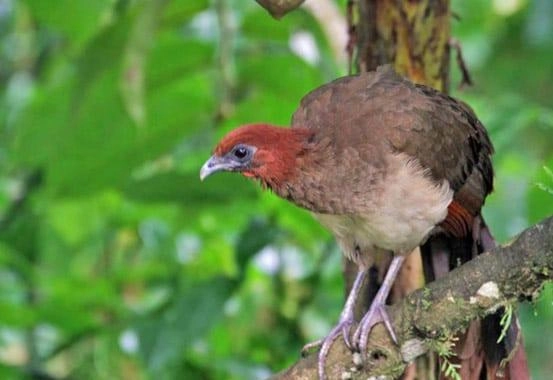
The Spotted Chachalaca is a large bird that resembles a wild chicken, common in the Amazon rainforest and areas near rivers. Its active behavior makes it easy to spot.
Its brown plumage with scaly patterns provides excellent camouflage among the vegetation. It is distinguished by its bare, reddish throat, a characteristic of the species.
It is famous for its loud calls at dawn and dusk, which can often be heard over great distances within the rainforest.
Cuco Ardilla (Coccycua minuta)
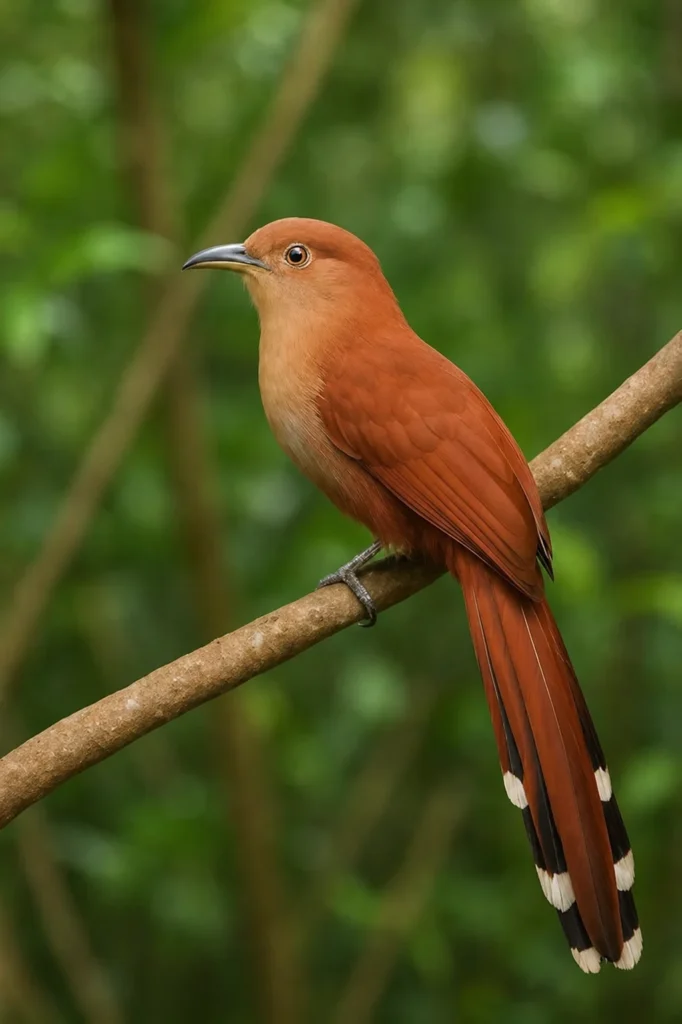
The Squirrel Cuckoo is a small bird in the cuckoo family, known for its reddish body, yellow beak, and discreet behavior in the rainforest.
It primarily inhabits dense undergrowth and forest edges, where it forages for insects and small prey among low branches and vegetation near water.
It is a difficult species to observe due to its elusive nature, but highly prized by birdwatchers specializing in Amazonian birds.
Colibrí Raquetado (Ocreatus underwoodii)
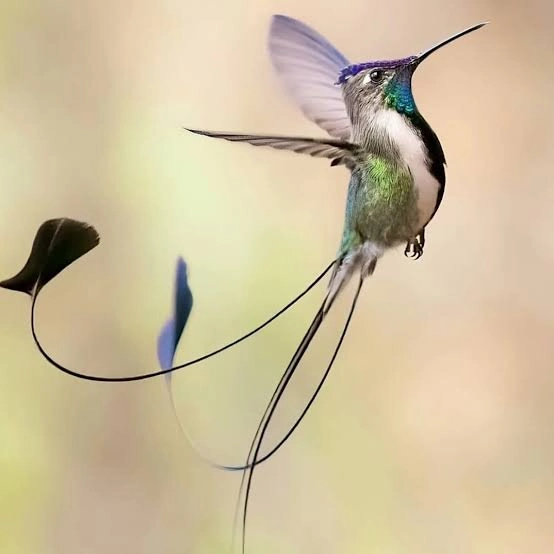
The Racket-tailed Hummingbird is one of the most striking species of the Andean forests, famous for its long, racket-shaped tail, a unique characteristic among hummingbirds.
Males have bright plumage and ornamental tail extensions, while females have more subdued colors and shorter tails.
They feed on nectar and small insects, visiting high-altitude flowers and playing an important role in pollination.
Topacio Carmesí (Topaza pella)
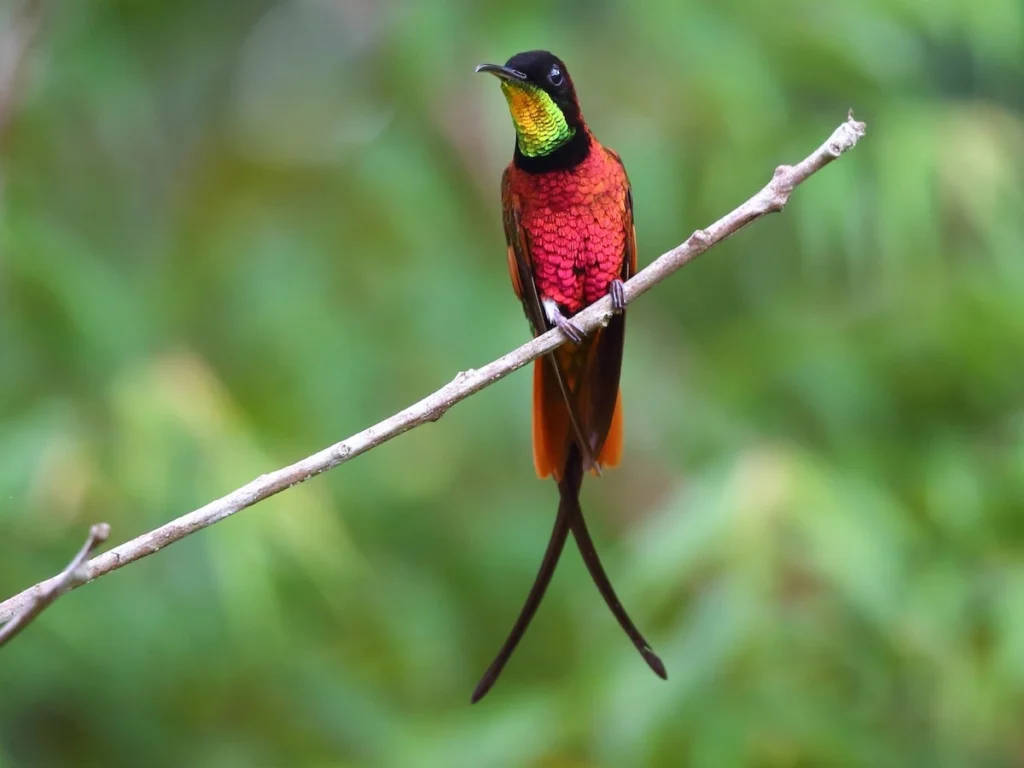
The Crimson Topaz is one of South America’s most spectacular hummingbirds, known for its brilliant metallic colors and impressively long tail.
Its plumage includes vibrant green hues and a bright throat, making it one of the most admired jewels of the tropical Amazon.
It feeds primarily on nectar, though it also catches small insects to supplement its diet and obtain protein.
Cotinga de Garganta de Ciruela (Cotinga maynana)
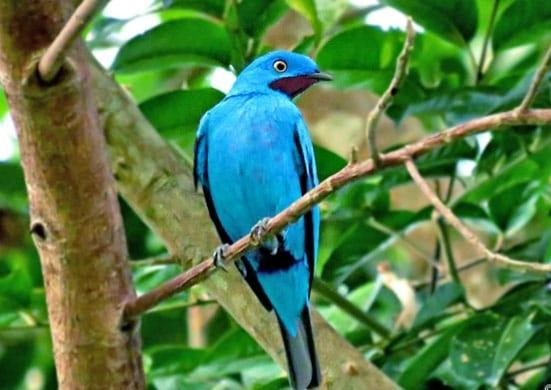
The Plum-throated Cotinga is one of the most elegant and colorful birds in the Amazon rainforest. The male is distinguished by its brilliant turquoise plumage and deep purple throat.
The females have muted brown tones, which helps them camouflage themselves better during the nesting season.
They feed on fruit and are usually found in tall trees within humid tropical forests and areas of dense vegetation.
Tangara Cara de Fuego (Tangara parzudakii)
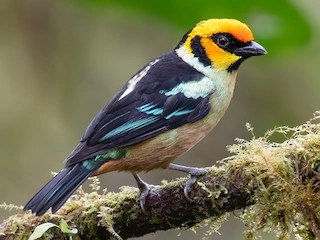
The Fire-faced Tanager is a small tropical bird distinguished by its bright red face and vibrant colors, making it one of the most striking species in the Andean forest.
Its combination of red, yellow, green, and black creates spectacular plumage that stands out against the humid mountain vegetation.
It typically moves in small groups and mixed flocks, feeding mainly on fruits and insects.
Caracara de Cabeza Amarilla
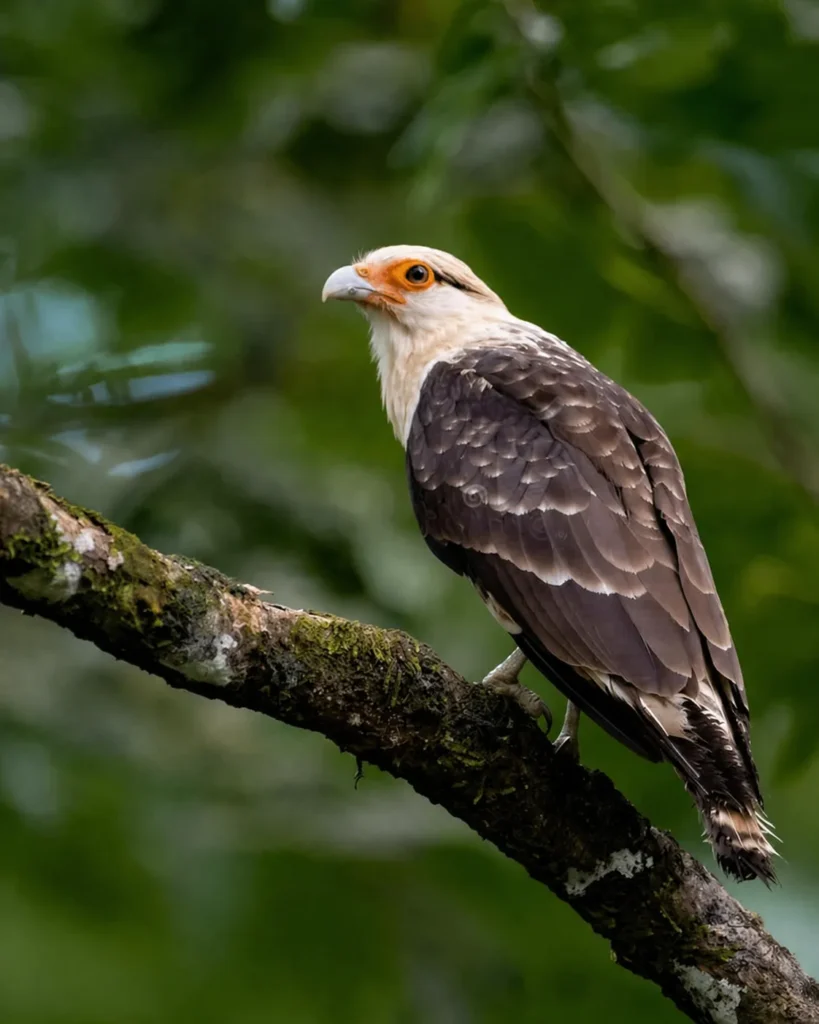
The Yellow-headed Caracara is a medium-sized bird of prey known for its remarkable adaptability and ability to survive in diverse tropical ecosystems.
Its light brown plumage and yellowish head with dark markings make it easily identifiable among other Amazonian raptors.
It feeds on small animals, insects, and carrion, playing a vital role in maintaining the natural balance of the rainforest.
Martín Pescador Amazónico (Chloroceryle amazona)
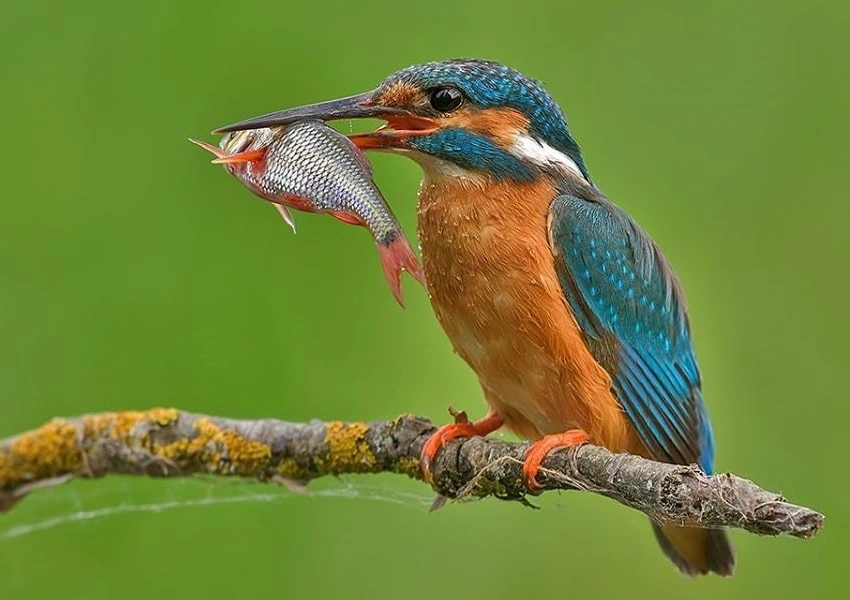
The Amazonian Kingfisher is a species specialized in hunting fish and small amphibians, very common in lagoons, rivers, and floodplains of the Amazon.
Its dark green and bright blue plumage, along with its long, sharp beak, make it a highly efficient hunter.
It is frequently seen perched on branches near the water, waiting for the perfect moment to swoop down on its prey.
Oropéndola Verde (Psarocolius viridis)
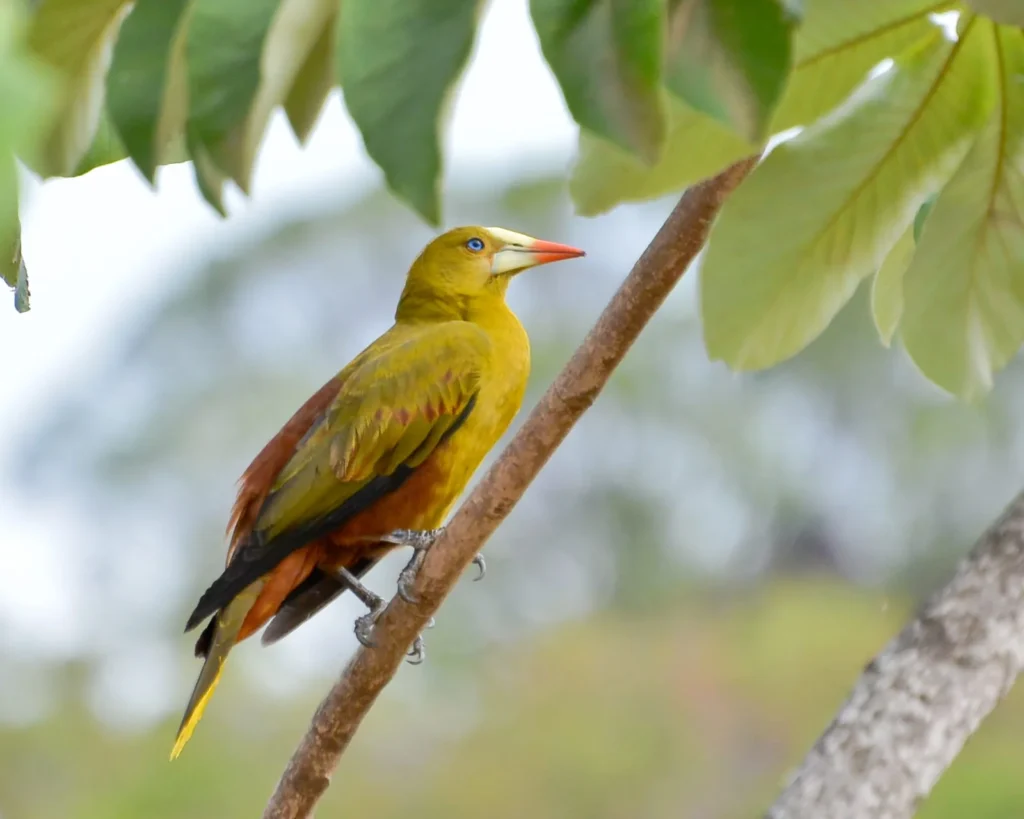
The Green Oropendola is a striking, social bird that inhabits the Amazon basin, renowned for its vocal abilities and complex songs.
Its olive-green plumage with chestnut tones and yellow tail make it easily distinguishable within the tropical forests.
It feeds on fruits, insects, and nectar, and typically builds hanging nests in colonies high in trees.
Tangara Dorada (Tangara arthus)
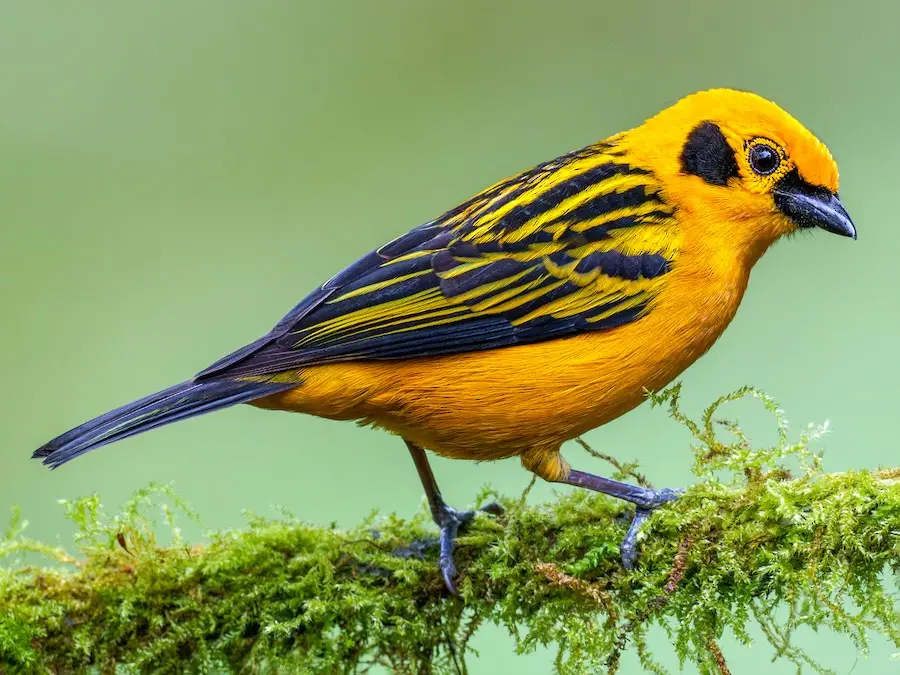
The Golden Tanager is a small, brightly colored bird that inhabits cloud forests and subtropical Andean regions. Its most distinctive feature is its brilliant yellow plumage.
It has black markings on its wings and back, creating a strong visual contrast that makes it stand out among the vegetation.
It is very active and usually moves in mixed flocks, searching for fruits and insects among high branches.
Tangara del Paraíso (Tangara chilensis)
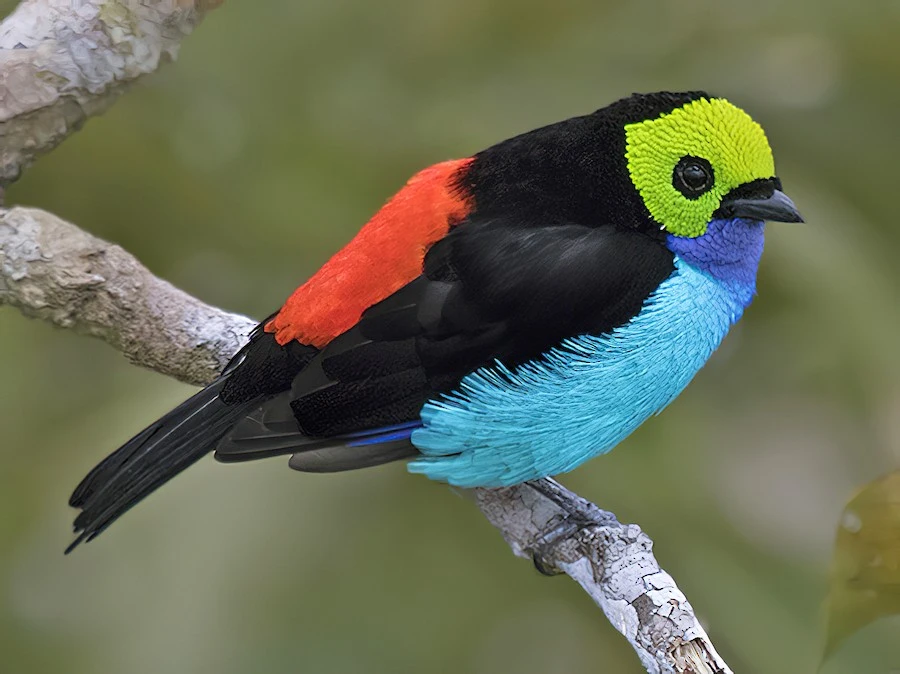
The Paradise Tanager is considered one of the most beautiful birds in the Amazon due to its stunning combination of vibrant and contrasting colors.
Its plumage blends green, red, blue, and black, creating a spectacular appearance that makes it a favorite among photographers and birdwatchers.
It primarily inhabits the canopy of the rainforest, where it feeds on fruits and insects.
Pájaro Paraguas Amazónico (Cephalopterus ornatus)
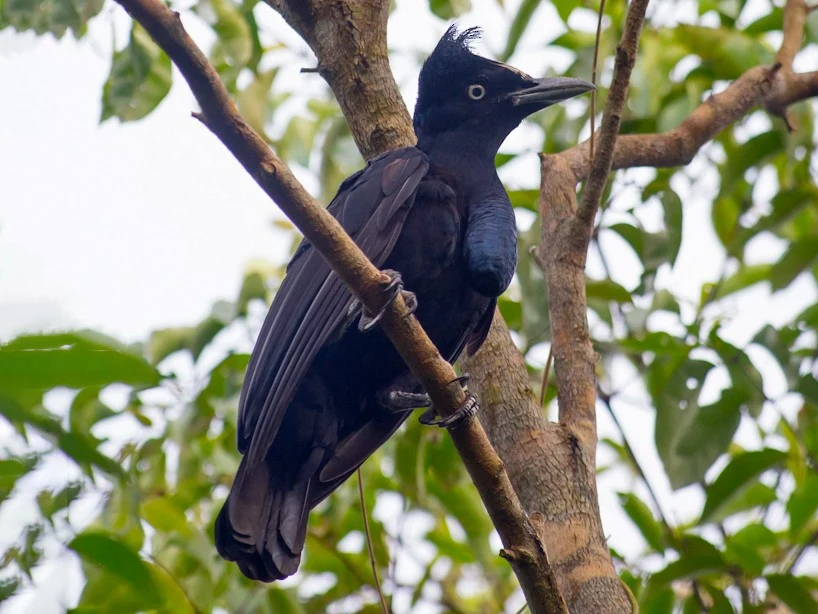
The Amazonian Umbrella Bird is one of the strangest and most striking birds in the rainforest. Its large black crest and long, dangling wattle make it unmistakable.
Males use these features during courtship displays to attract females, emitting deep, resonant calls.
It inhabits humid forests and areas near rivers, where it usually remains hidden among the tall vegetation.
Jay Violáceo (Cyanocorax violaceus)
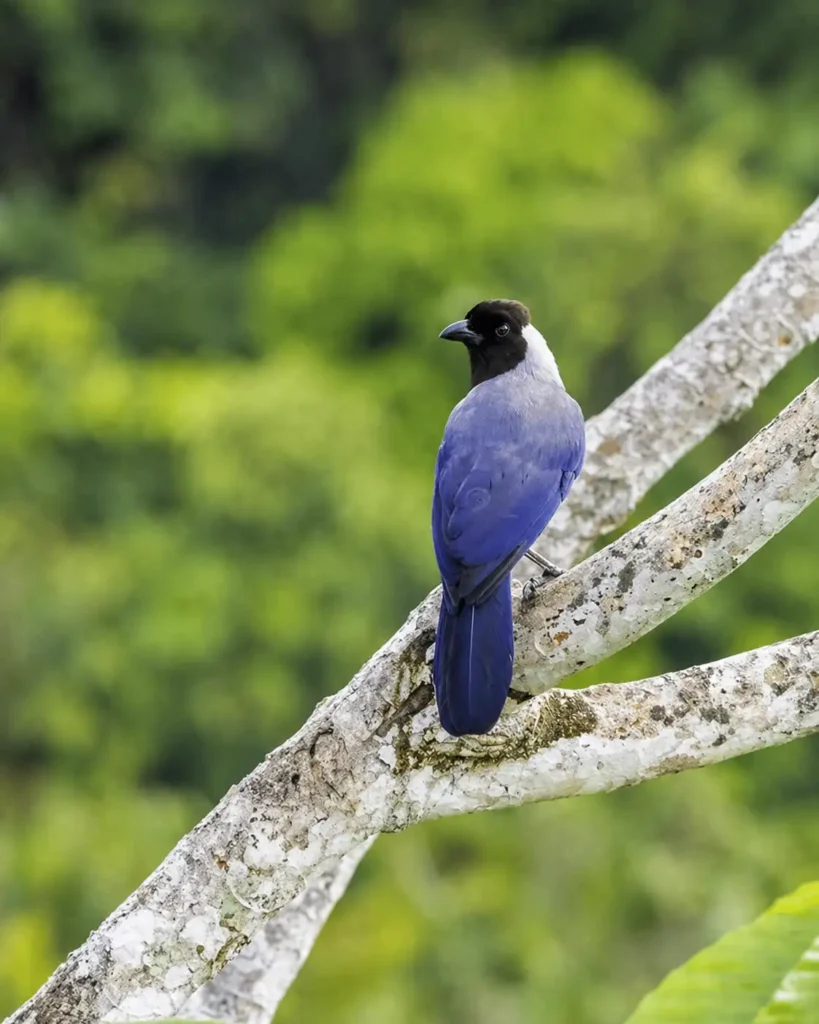
The Violet Jay is an intelligent and social bird with striking blue plumage and a dark head, common in open areas and the edges of Amazon rainforest.
Its curious and active behavior makes it a highly visible species during treks through the jungle.
It feeds on fruits, insects, and small vertebrates, adapting easily to different tropical environments.
Tangara de Orejas Naranjas (Chlorochrysa calliparaea)
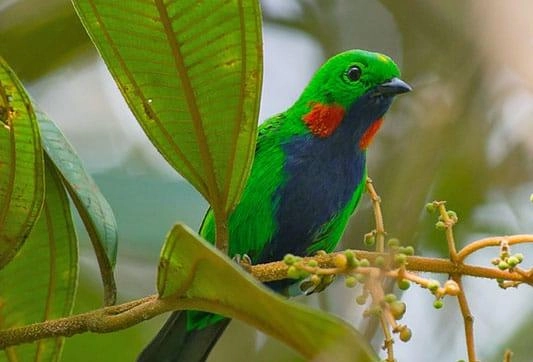
The Orange-eared Tanager is a very colorful cloud forest bird, known for its bright green plumage and distinctive orange patch near its head.
Males have more intense colors, while females have softer, more subdued tones.
It moves in mixed-gender flocks through the forest canopy, feeding on small fruits and insects.
TOURS TO MANU PARK
3-Day Manu Tour
Discover the magic of the Peruvian Amazon with an incredible 3-day tour of Manu National Park. Experience an adventure filled with nature, breathtaking landscapes, and exotic wildlife as you explore one of the most biodiverse places on the planet. During the trip, you’ll observe tropical birds, monkeys, caimans, and a wide variety of Amazonian flora. You’ll also enjoy guided hikes, boat trips, and nights surrounded by the sounds of the rainforest. Ideal for those seeking a short but unforgettable experience in the heart of Manu.
4-Day Manu Tour
Dare to explore the Amazon rainforest with a fascinating 4-day tour to Manu National Park, one of the world’s most important nature reserves. This tour will allow you to experience diverse ecosystems, from cloud forests to deep rainforests. You’ll have the opportunity to navigate Amazonian rivers, observe animals in their natural habitat, and enjoy unique sunrises surrounded by nature. The tour includes adventure activities, birdwatching, and direct contact with Manu’s impressive biodiversity. Perfect for travelers seeking an authentic connection with nature.
6-Day Manu Tour
Experience the Peruvian rainforest with an extraordinary 6-day tour of Manu National Park. This journey will take you to discover the very essence of the Amazon, exploring remote areas teeming with wildlife and spectacular landscapes. Unlike shorter tours, this one allows you to delve much deeper into the Manu rainforest, visiting more secluded and less-explored areas where nature remains virtually untouched. During the expedition, you’ll visit macaw clay licks, hike along ecological trails, take night excursions, and navigate rivers surrounded by lush vegetation. Each day offers new opportunities to observe exotic animals and enjoy the tranquility of nature. An ideal adventure for lovers of ecology, photography, and adventure tourism.
Hello, I would really like to visit Manu because I’ve always dreamed of exploring the Peruvian rainforest and completely disconnecting from daily routine. I’ve been comparing 3-day and 4-day tours, but I’m not sure if that amount of time is enough for a full experience. I also wanted to know if the tours include boat rides and visits to lakes or wildlife clay licks.
Hi Chloe, both our 3-day and 4-day tours at Wonderful Machu Picchu provide an incredible Amazon experience. During the tour, travelers navigate the Madre de Dios River, visit the Parrot Clay Lick, and explore Machu Wasi Lake on traditional rafts while observing wildlife such as hoatzins, monkeys, capybaras, and many exotic birds. The 4-day option allows more time to explore deeper areas and enjoy additional wildlife observation opportunities.
Hello, I’m interested in visiting Manu because I’m a birdwatching enthusiast and I’ve heard it’s one of the best places in the world for spotting birds. I would like to know if there are specific seasons when it is easier to see macaws and toucans. I also wanted to ask whether the tour guides have specialized knowledge about birds and rainforest wildlife.
Hi Ethan, Manu is truly one of the world’s best birdwatching destinations. On our tours with Wonderful Machu Picchu travelers frequently observe Cock-of-the-rocks, trogons, parrots, hoatzins, horned screamers, and many additional bird species throughout the journey. Our professional guides are experienced in rainforest wildlife and help visitors identify birds and animals during excursions and river navigation.
Good evening, my partner and I would love to visit Manu National Park because we are looking for a more adventurous experience away from the cities. We are especially interested in visiting local communities, navigating Amazon rivers, and hiking through the rainforest. We are also a bit concerned about insects and the climate, so we wanted to know how prepared travelers should be for this kind of trip.
Hi Ashley, our Manu tours at Wonderful Machu Picchu are perfect for travelers looking for adventure and nature. The experience includes navigation on the Madre de Dios River from Atalaya Port, jungle walks, wildlife observation, and visits to incredible natural areas such as Machu Wasi Lake and the Parrot Clay Lick. We recommend bringing light clothing, rain protection, insect repellent, sunscreen, and comfortable hiking shoes for the best experience.
Hello, I’m passionate about nature photography and I’ve wanted to visit Manu National Park for a long time to photograph exotic birds and Amazonian landscapes. I’ve read that there are areas with extraordinary biodiversity, and I would like to know if the tours allow enough free time for photography. I’m also curious if there is internet signal or electricity available at the jungle lodges.
Hi Sophia, Manu is an incredible destination for nature photography and our tours provide many opportunities to capture wildlife and landscapes. During the journey with Wonderful Machu Picchu you can photograph species such as Cock-of-the-rocks, trogons, telipogon birds, monkeys, capybaras, and even tapirs if you are lucky. At Machu Wasi Lake, guests explore on a traditional raft to observe hoatzins and horned screamers in their natural habitat. Some lodges offer limited electricity during certain hours, while internet access is usually very limited in the jungle.
Hi, I’m planning to visit Manu National Park in the next few months because I’ve always been fascinated by the Amazon rainforest and the incredible biodiversity found there. I’ve seen amazing photos of birds, monkeys, and stunning natural landscapes, but I would like to know what the best season is for spotting wildlife. I also wanted to ask if most tours include full transportation from Cusco and whether it’s better to stay several days to truly experience the area.
Hi Emily, at Wonderful Machu Picchu our 3-day and 4-day Manu tours include transportation from Cusco, accommodation, lunch, dinner, breakfast (except the first breakfast), professional guides, and all excursions. During the trip we navigate the Madre de Dios River from Atalaya Port, visit the famous Parrot Clay Lick, and explore Machu Wasi Lake on a handmade raft where you can observe hoatzins, horned screamers, and many other species. The best wildlife season is usually between April and October, although Manu is amazing all year round.
Hi Michael, our tours at Wonderful Machu Picchu are designed for travelers with average physical condition. Activities include moderate jungle walks, river navigation, and wildlife observation. Along the route, travelers often spot monkeys, capybaras, tapirs, trogons, and the famous Cock-of-the-rock. We also recommend checking with your doctor about the yellow fever vaccine before traveling to the Amazon.
Hi Michael, our tours at Wonderful Machu Picchu are designed for travelers with average physical condition. Activities include moderate jungle walks, river navigation, and wildlife observation. Along the route, travelers often spot monkeys, capybaras, tapirs, trogons, and the famous Cock-of-the-rock. We also recommend checking with your doctor about the yellow fever vaccine before traveling to the Amazon.
Hello, I’m planning to travel to Manu National Park in July and I’d like to know if that season is usually very crowded with tourists or if it’s still possible to enjoy peaceful places. I also wanted to ask whether tours normally include full meals and how comfortable the jungle lodges usually are.
Hi Jacob, July is part of the high travel season, but Manu still offers peaceful and remote natural areas because of its vast rainforest environment. At Wonderful Machu Picchu our tours include accommodation, lunch, dinner, breakfast (except the first breakfast), transportation, and guided activities. The lodges are comfortable eco-lodges designed to provide an authentic jungle experience while still offering essential comforts.
Hello, I have a question. I’m thinking about traveling alone to Manu National Park because I’m very interested in nature and adventure, but I’ve never visited the Amazon rainforest before. I would like to know if it’s safe for solo travelers, how the group dynamics usually are during tours, and whether you recommend bringing any special equipment for the trip.
Hi Ryan, many solo travelers join our Manu tours with Wonderful Machu Picchu and usually have a great experience connecting with the group and guides. Our programs include transportation, meals, accommodation, and guided excursions, making the journey comfortable and organized. We recommend bringing light clothing, rain gear, insect repellent, a flashlight, binoculars, and a camera to fully enjoy the wildlife and rainforest scenery.
Hello, I’m organizing a family trip to Manu National Park because we want to do something different this year and reconnect with nature. We’ll be traveling with older family members, so I’d like to know if there are comfortable tour packages with safe accommodations and less demanding activities. I also wanted to ask if there is a chance to see larger animals such as tapirs or caimans during the trip.
Hi Daniel, our 3-day and 4-day tours at Wonderful Machu Picchu are suitable for families and include comfortable eco-lodges, guided excursions, transportation, meals, and river activities. The itinerary combines nature with moderate walks and relaxing boat rides along the Madre de Dios River. Wildlife sightings may include monkeys, capybaras, caimans, exotic birds, and occasionally tapirs depending on the season and conditions.
Hi, I recently watched a documentary about the Peruvian Amazon and became fascinated by everything related to Manu National Park. I’d like to know how long a complete tour usually lasts and whether a 5- or 6-day experience is truly worth it compared to a shorter tour. I’m also curious about the kinds of activities that are usually done at night in the jungle.
Hi Olivia, our most popular programs at Wonderful Machu Picchu are the 3-day and 4-day Manu tours, which already provide an amazing rainforest experience. Travelers enjoy activities such as navigating the Madre de Dios River, visiting the Parrot Clay Lick, exploring Machu Wasi Lake on handmade rafts, and spotting a huge variety of wildlife. At night, we often do jungle walks where guests can observe insects, frogs, nocturnal birds, and sometimes caimans near the riverbanks.