The Inca Jungle Trail is one of the most adventurous and versatile routes to Machu Picchu, designed as an alternative to the Classic Inca Trail. Perfect for travelers of different ages with a spirit of adventure, this trek combines hiking, biking, rafting, and zip‑lining with breathtaking landscapes and cultural encounters.
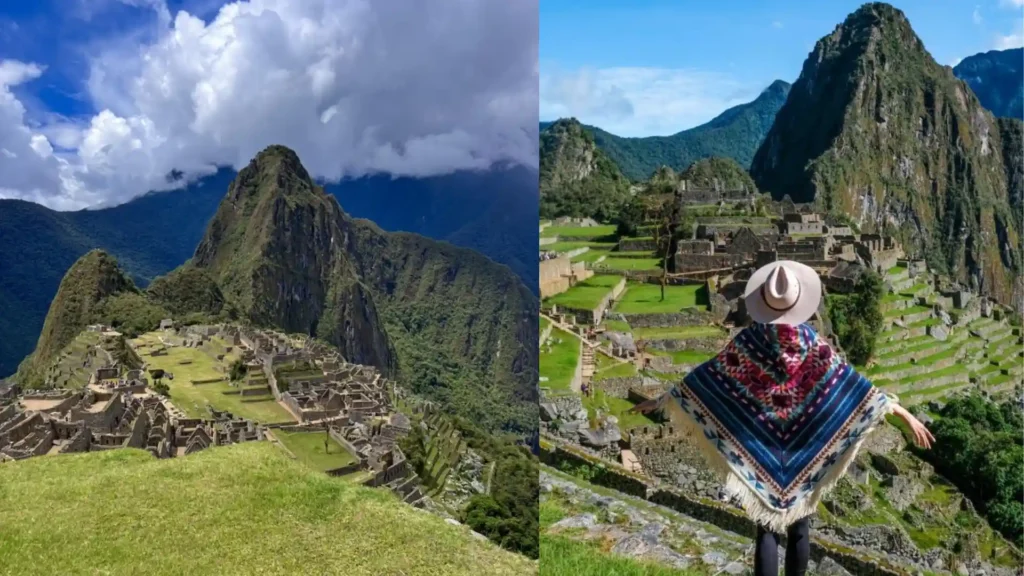
Starting in Cusco, the journey crosses the Sacred Valley of the Incas, descends through the cloud forest, and ends at the legendary Machu Picchu. Over four days, trekkers experience snow‑capped passes, tropical valleys, coffee plantations, waterfalls, hot springs, and vibrant Andean villages.
Inca Jungle Trek – The Basics
How long does the Inca Jungle Trail last?
The Inca Jungle trek usually takes 4 days and 3 nights (4D/3N). However, it is possible to complete the trek in a shorter 3D/2N itinerary if arranged as a private tour.
The total hiking distance is approximately 50 km / 31 miles, though this may vary depending on the travel company and specific routes chosen. The trek is divided into three main hiking days, with Day 2 being the longest: between 10–22 km / 6.2–13.7 miles, averaging about 6 hours of walking.
What activities can you do on the Inca Jungle Trek?
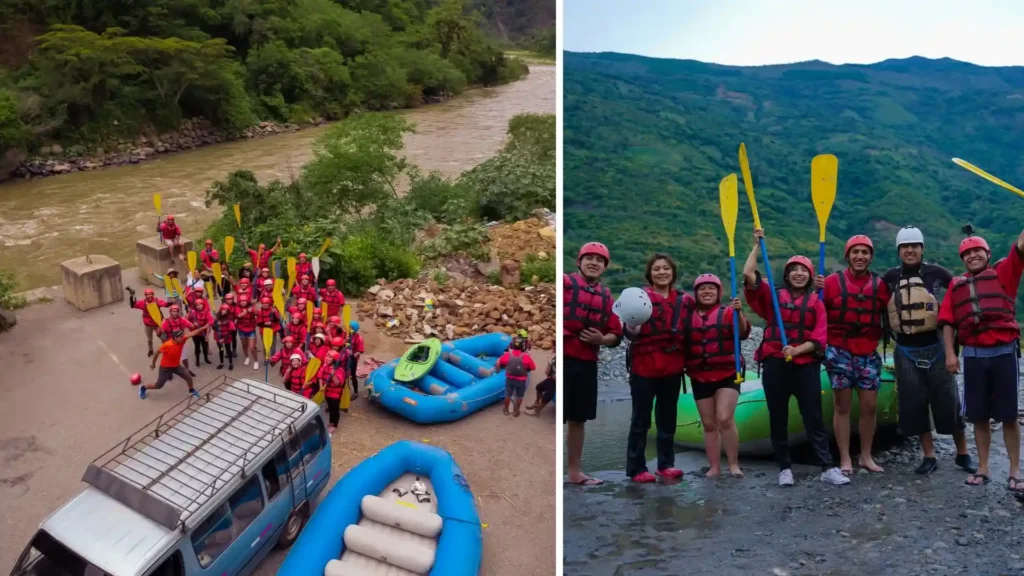
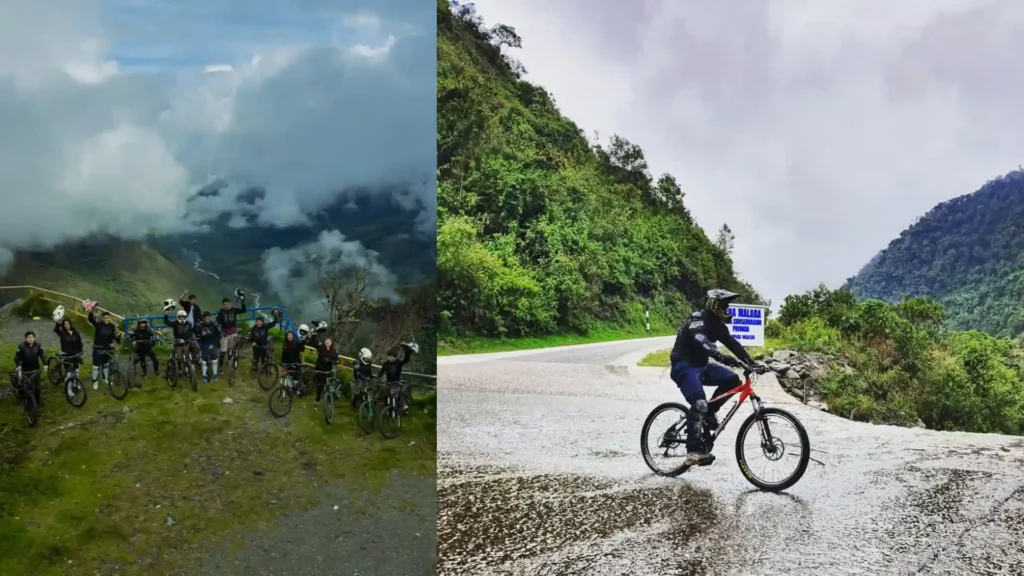
- Day 1: The adventure begins with about 3 hours of cycling (65 km / 40 miles) down from Abra Málaga pass. This is followed by 2 hours of white‑water rafting on the Urubamba River. Rafting availability depends on the season and river conditions. Most tours run on Class II–III rapids, suitable for beginners, though some operators offer Class IV rapids for more experienced adventurers.
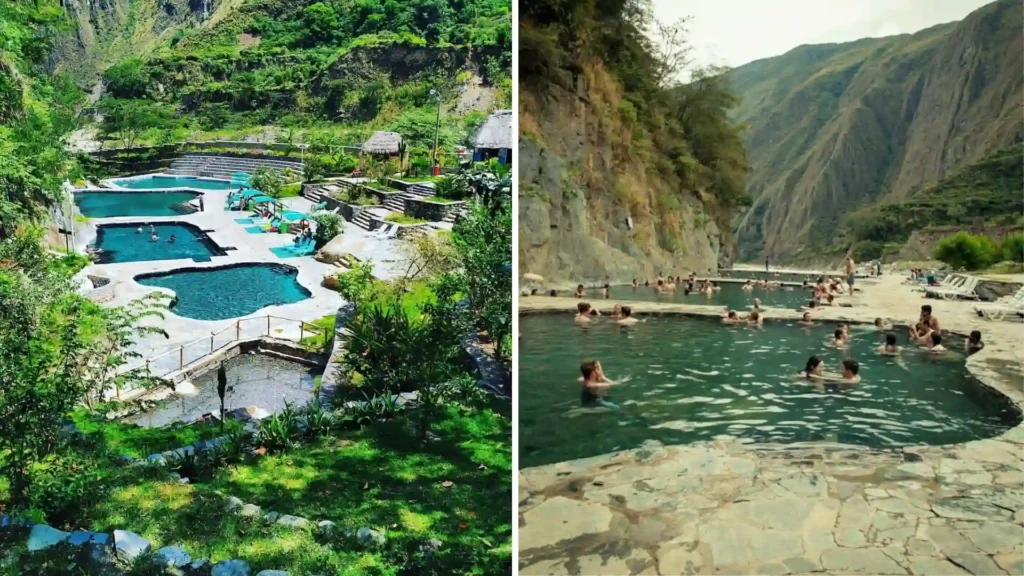
- Day 2: A full day of trekking, around 7 hours, through fruit plantations and lush jungle. Travelers can taste fresh fruits directly from the trees and enjoy birdwatching along the way. The day ends with a relaxing soak in the Cocalmayo hot springs, perfect for tired muscles.
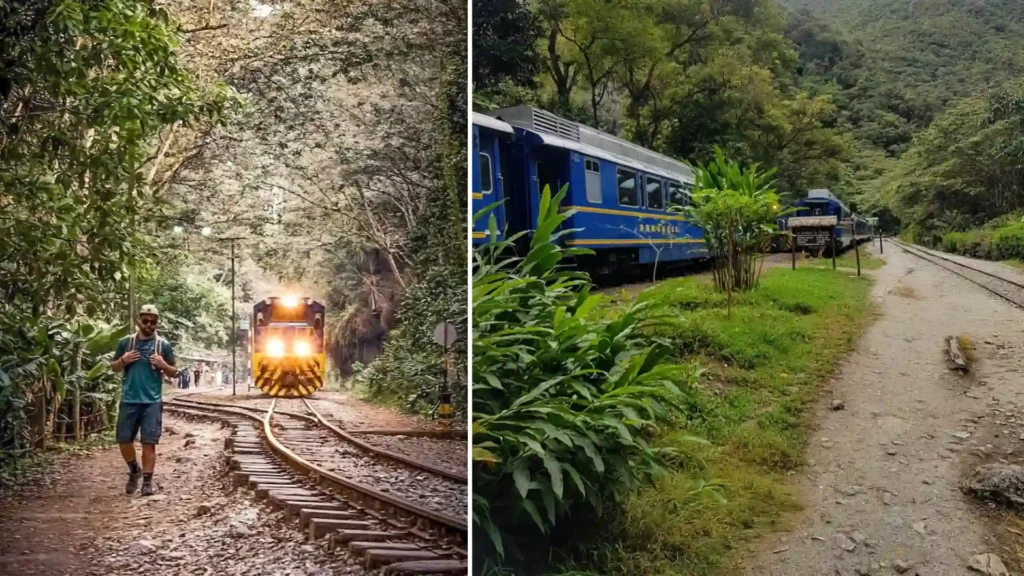
- Day 3: About 3 hours of hiking along a section of the original Inca Trail, followed by a flat walk along the railway tracks to reach Aguas Calientes (Machu Picchu Pueblo).
- Day 4: Dedicated entirely to exploring Machu Picchu. Visitors can also add an optional hike up Huayna Picchu Mountain, which offers panoramic views of the citadel and access to hidden temples at the summit.
Where Do You Sleep on the Inca Jungle Trail?
Accommodation during the Inca Jungle trek depends on the type of tour package you book. Budget tours usually include basic hostels or rustic lodges, while premium operators select more comfortable countryside hostels for the first two nights and 3‑star hotels in Aguas Calientes. Travelers can upgrade to 4‑ or 5‑star hotels in Aguas Calientes if desired.
It’s important to note that lodging options in the jungle are limited, so choices are fewer compared to Cusco or Aguas Calientes. Still, the accommodations are clean, safe, and provide the essentials for a good night’s rest after long days of adventure.
Inca Jungle Route Options and Maps
The trek is most commonly completed in a 4‑day / 3‑night itinerary, though some companies offer slight variations.
Standard Itinerary
Inca Jungle Trek to Machu Picchu
- Day 1: Cusco – Abra Málaga Pass – Santa María
- Day 2: Santa María – Hot Springs – Santa Teresa
- Day 3: Santa Teresa – Hydroelectric – Aguas Calientes
- Day 4: Aguas Calientes – Machu Picchu – Cusco
Day 1: Cusco – Ollantaytambo – Abra Málaga – Santa María (Cycling & Rafting)
Our adventure begins at 6:00 am when your guide picks you up from your hotel in Cusco in a private van. We drive to Ollantaytambo, where you’ll have time for breakfast. From there, we continue uphill to reach the Abra Málaga Pass (4,350 m / 14,357 ft). After a short preparation, we start a thrilling 3‑hour downhill cycling journey toward Santa María (1,500 m / 4,950 ft).
Along the way, you’ll pass through diverse microclimates from the high Andean plateau to cloud forest and tropical jungle and visit two impressive archaeological sites: Incatambo and Wamanmarca.
In the afternoon, there’s the option to enjoy 2 hours of rafting on the Urubamba River (depending on season and river conditions). Afterward, we return to our countryside lodge for tea, snacks, and dinner.
Included Meals: Lunch – Dinner
Accommodation: Countryside lodge
Minimum Altitude: 1,500 m / 4,950 ft
Maximum Altitude: 4,350 m / 14,357 ft
Difficulty: Moderate / Challenging
Day 2: Santa María – Santa Teresa
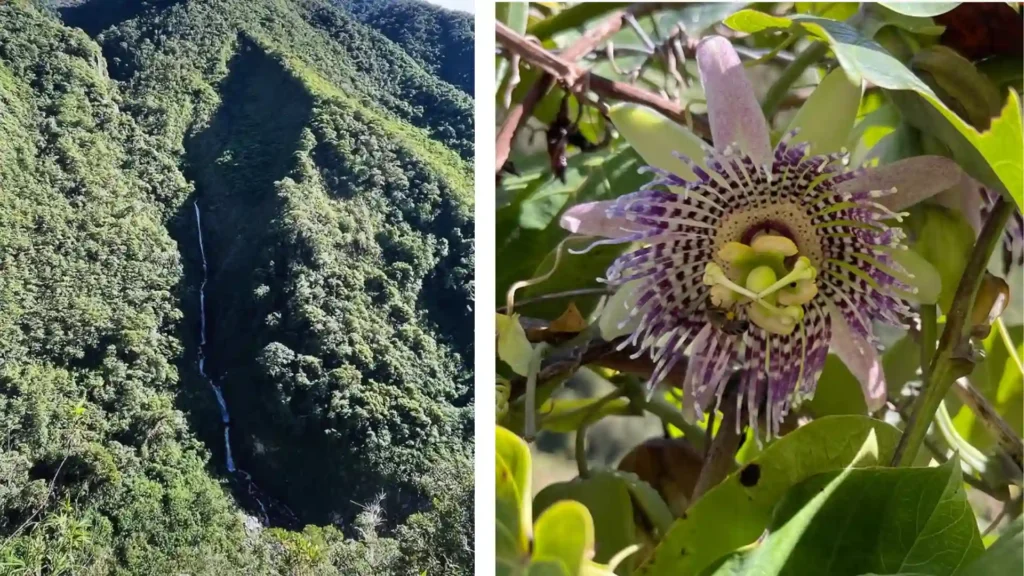
After an early breakfast, we begin a seven‑hour hike through the tropical jungle, enjoying a wide variety of fruit plantations such as avocados, cassava, oranges, mangoes, cacao, coffee, and coca shrubs. We reach Quellomayu for lunch before continuing uphill along a moderate slope that takes us onto a section of the original Inca Trail.
Our destination is the Cocalmayo hot springs, where we will relax in the medicinal waters after the long trek. Once refreshed, we continue to Santa Teresa, where we spend the night in a countryside lodge.
Included Meals: Breakfast – Lunch – Dinner
Accommodation: Countryside lodge
Minimum Altitude: 1,500 m / 4,950 ft
Maximum Altitude: 1,900 m / 6,270 ft
Distance: Approximately 14 km
Difficulty: Day 3: Santa Teresa – Hydroelectric Station – Aguas Calientes
Today is considered the most challenging yet most beautiful day of the trek. After breakfast, we drive for about 30 minutes to Lucmabamba (2,000 m / 6,600 ft), where we begin a moderate uphill hike of 3 hours through sections of the original Inca Trail and the cloud forest, reaching the Puncuyoc Pass.
From there, we descend for about 20 minutes to Llactapata (2,700 m / 8,907 ft), an Inca site located directly across from the Machu Picchu citadel. The panoramic views from this spot are breathtaking; you can see different angles of Machu Picchu, Huayna Picchu, and the Aobamba Canyon, where another stretch of the Inca Trail is visible.
We then continue downhill for about 2 hours until reaching the Hydroelectric Station, where we stop for lunch. Afterward, we walk for another couple of hours through the Machu Picchu National Park until arriving at Aguas Calientes (Machu Picchu Pueblo). Alternatively, travelers may take the train for this section.
Upon arrival, we check into our hotel, with free time to explore or shop in this picturesque town. In the evening, we enjoy dinner together at a local restaurant before resting for the big day ahead.
Included Meals: Breakfast – Lunch – Dinner
Accommodation: Standard 3‑star hotel in Aguas Calientes
Minimum Altitude: 2,000 m / 6,600 ft
Maximum Altitude: 2,850 m / 9,407 ft
Distance: Approximately 16 km
Difficulty: Moderate
Day 4: Aguas Calientes – Machu Picchu – Cusco
This is the day you’ve been waiting for! After an early breakfast at your hotel, you’ll take one of the first buses up to Machu Picchu, arriving in time to witness the sunrise. It is a truly extraordinary sight you won’t want to miss.
Your guide will lead a two‑hour tour of the citadel, showing you the most important areas and explaining how Machu Picchu is divided into three sectors: agricultural, residential, and religious.
After the guided visit, those who booked in advance for the Huayna Picchu hike will have time to enjoy the panoramic views and explore hidden temples at the summit. Once you’ve taken in the exceptional scenery, you’ll return by bus to Aguas Calientes for lunch (not included). Depending on your train departure time, you may also have free time for shopping, sightseeing, or visiting the museum or hot springs.
In the afternoon, the Expedition train takes you back to Ollantaytambo (departures around 2:55 pm or 3:20 pm), following the spectacular Urubamba River. Near Aguas Calientes, the canyon narrows and the river flows through beautiful white‑water sections. If you look up along the steep canyon walls, you may even spot Wiñay Wayna, another remarkable Inca site.
Upon arrival in Ollantaytambo, your driver will meet you at the train station and transfer you back to your hotel in Cusco in a private vehicle. Expect to arrive around 7:00 pm.
Included Meals: Breakfast
Minimum Altitude: 2,040 m / 6,727 ft
Maximum Altitude: 2,440 m / 8,052 ft
Difficulty: Easy
Should You Do the Inca Jungle Trail?
The trek naturally attracts adventurous travelers who enjoy adrenaline‑filled experiences. Booking the Jungle Trail through a tour company allows you to combine multiple activities in just a few days.
If you’re looking to overcome certain fears, especially fear of heights, this could be the perfect opportunity to take the leap and join an epic adventure.
If you prefer treks that are exclusively hiking, consider these alternatives:
Alternative Treks to Machu Picchu
- Classic Inca Trail (4‑day trek or the shorter 2‑day version)
- Salkantay Trek
- Lares Trek
- Rainbow Mountain & Humantay Lake tours
Best Time for an Inca Jungle Trek
There are two main seasons in the subtropical Andes:
- Dry season: May to September
- Wet season: October to April
The trek can be done year‑round, but heavy rains in January and February often cause landslides, affecting the trail and road between Santa María and Santa Teresa. For this reason, the trek is usually closed during those months.
The best time to go is during the dry season or the shoulder months (March/April and October/November). Shoulder months are especially good for rafting in Santa María.
Although busier in the dry season, the Inca Jungle never reaches the capacity of the Classic Inca Trail, so you can still enjoy the trek without overwhelming crowds.
Temperatures remain fairly constant:
- Warm days around 20°C (68°F) or higher
- Cold nights and early mornings, often dropping to 0°C (32°F) or below
Bring trekking clothes you can layer, as daily temperatures fluctuate and activity warms you quickly. Rain is possible year‑round, so pack a rain poncho or waterproof jacket.
Altitude and Acclimatization
The trek is technically high‑altitude, but time spent at elevation is short.
- Highest point: Abra Málaga Pass (4,300 m / 14,108 ft), reached by vehicle and descended quickly by bike.
- Lowest point: Santa María (1,200 m / 3,937 ft).
- Most of the trek stays below 2,000 m / 6,562 ft.
- Machu Picchu itself sits at 2,430 m / 7,972 ft.
Altitude sickness is rare on this trek compared to others in the region. The greater risk is before starting, since most visitors fly into Cusco (3,400 m / 11,155 ft). Mild symptoms like headaches or nausea are common. Spend a few days acclimatizing in Cusco or descend to the Sacred Valley (1,000 m lower) before beginning the trek.
Fitness Level Required
The Inca Jungle Trek is diverse, combining trekking, cycling, rafting, and zip‑lining.
- The mountain biking section is downhill, manageable even for beginners.
- Total hiking distance: 49 km / 30 miles over three days, mostly on flat terrain without high passes.
A moderate level of fitness is helpful, but extreme preparation is not necessary.
Costs of the Inca Jungle Trek
Prices vary widely depending on the operator:
- Budget tours: Around US$250 per person
- Premium tours: Up to US$700 per person
- Typical range: US$400–600 per person
Inclusions (usually):
- Transportation throughout the trek
- Lodging in jungle hostels and hotel in Aguas Calientes
- Cycling equipment
- Guides and rafting gear
- Entry ticket to Machu Picchu
- Bus transfer to Machu Picchu
- Train or car return to Cusco
Exclusions (usually):
- Hot springs entrance fee
- Extra hike to Huayna Picchu or Machu Picchu Mountain
Tip: Choose a reputable operator with good equipment, service, and fair treatment of staff.
Trekking Insurance
Travel insurance is essential, and most operators will require proof of coverage. Make sure your policy includes mountain biking and white‑water rafting, as these are core activities of the trek.
The Inca Jungle Trek is ideal for adventurous travelers seeking variety, adrenaline, and cultural immersion. With biking, rafting, hiking, and the reward of Machu Picchu at the end, it’s one of the most dynamic alternatives to the Classic Inca Trail.